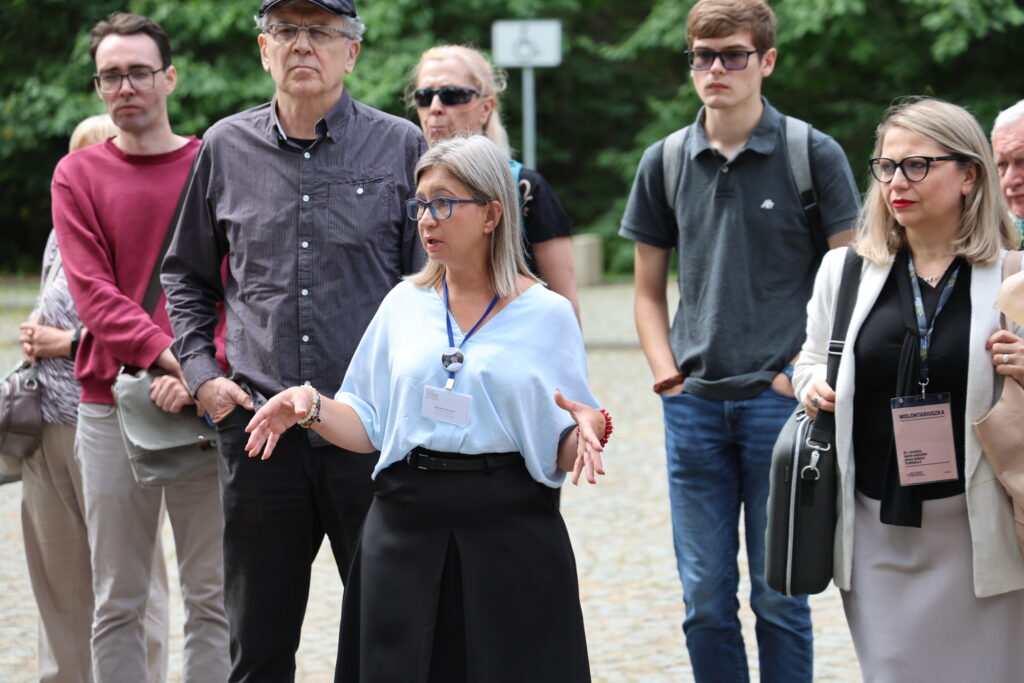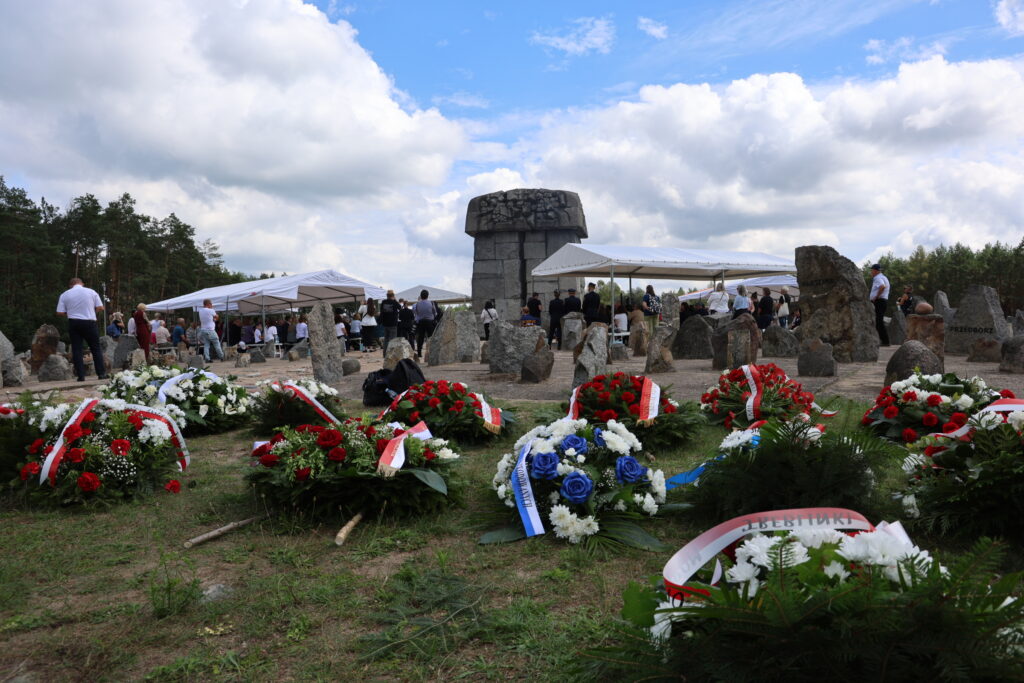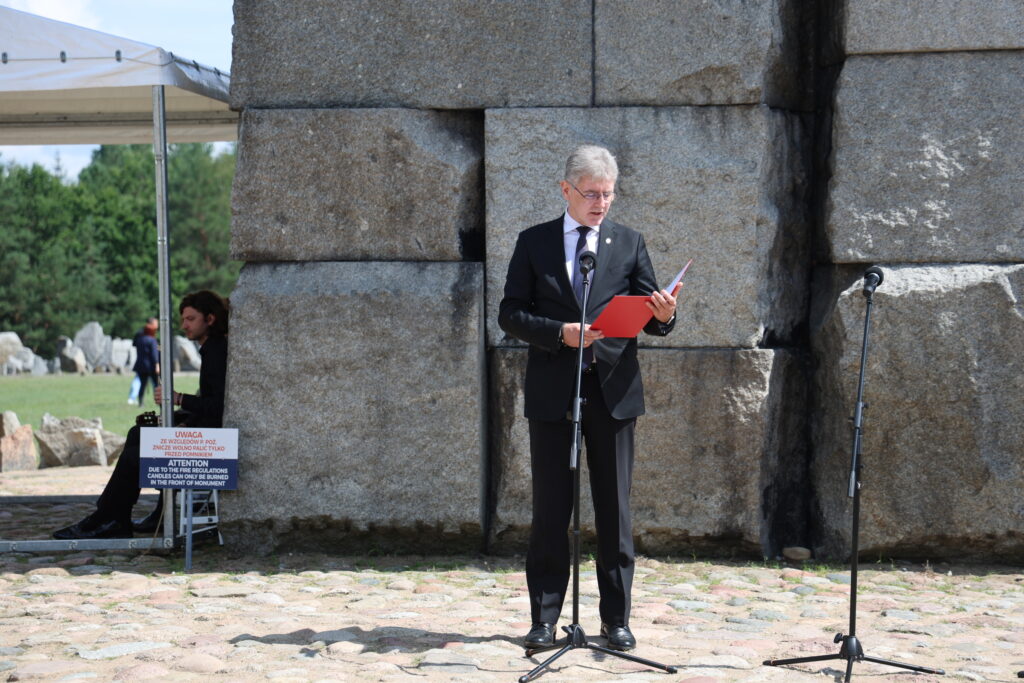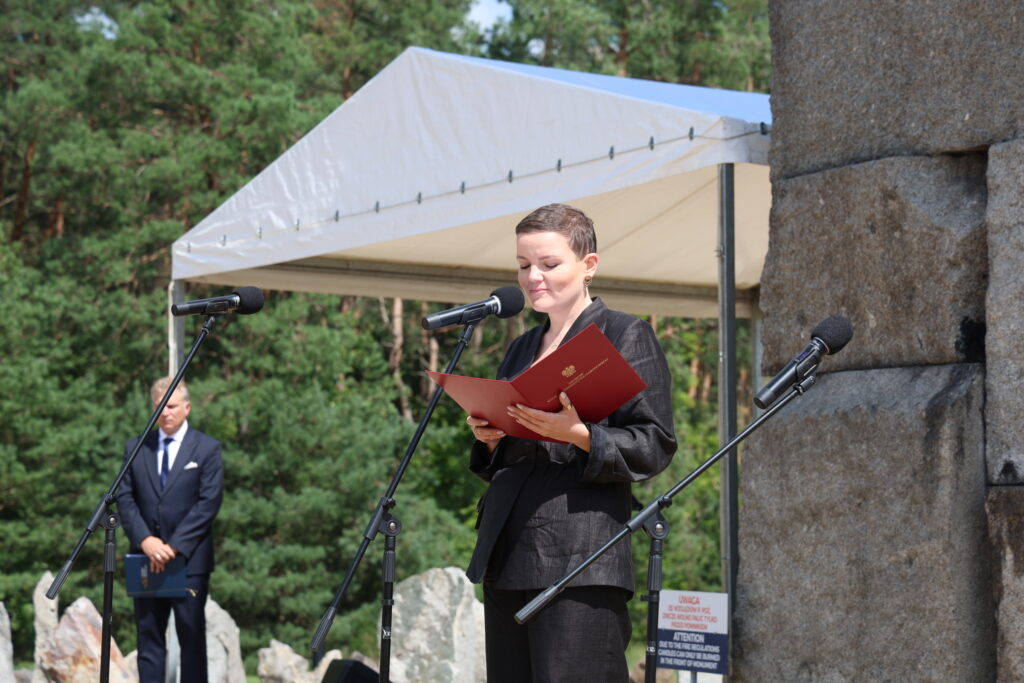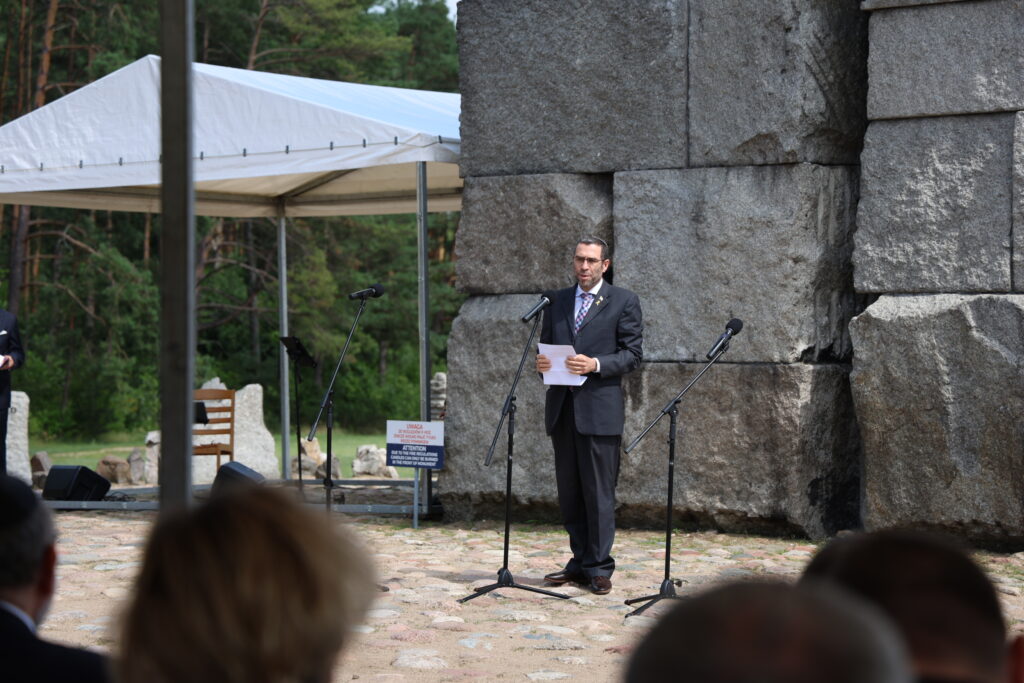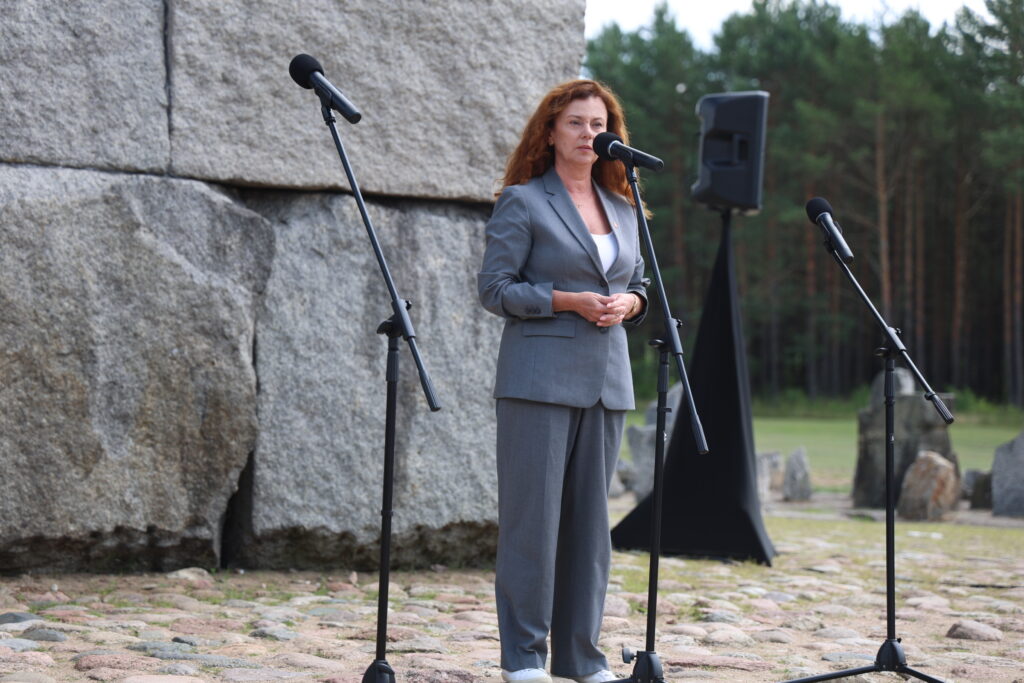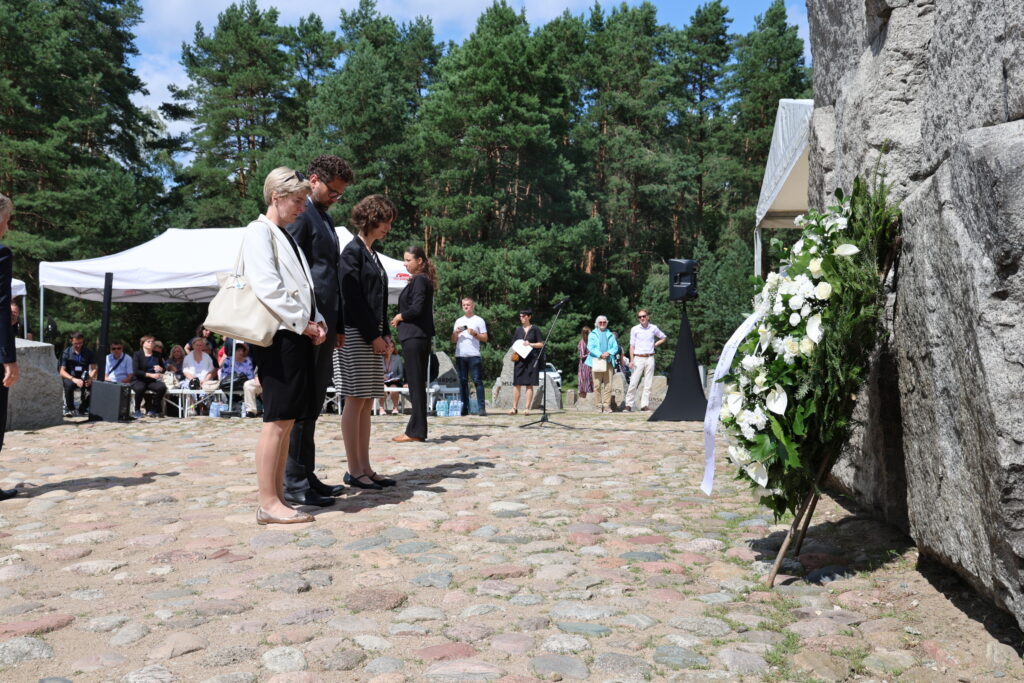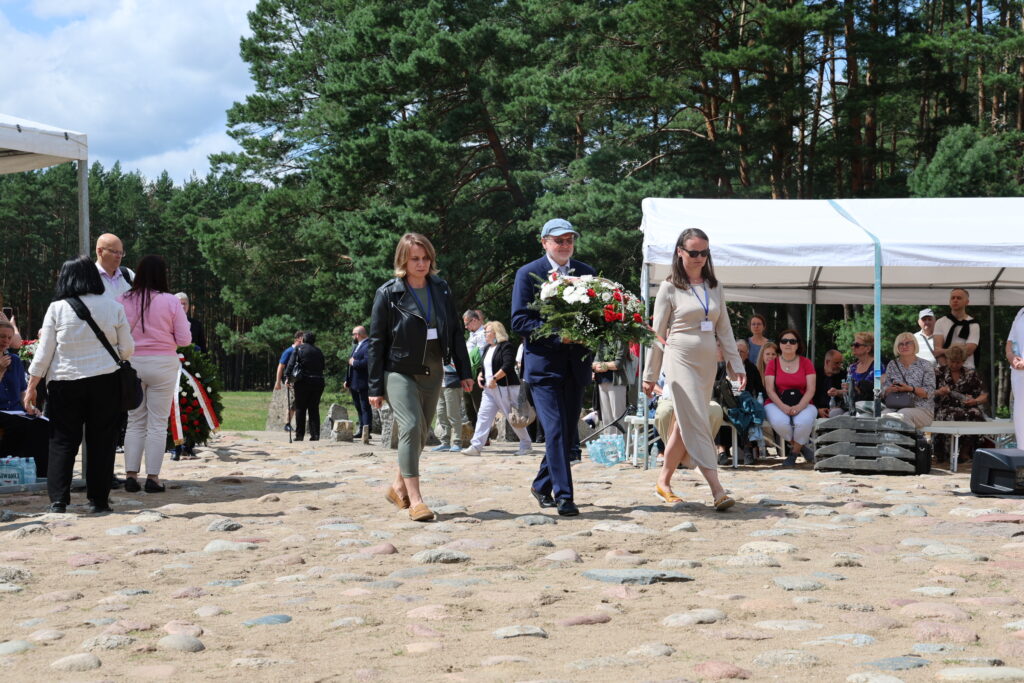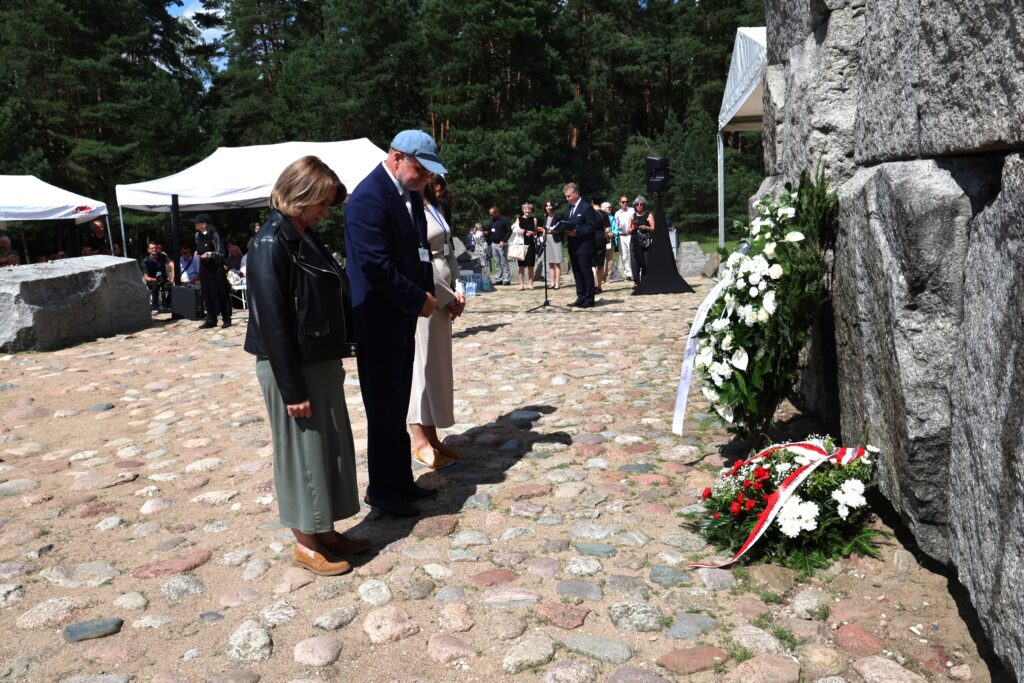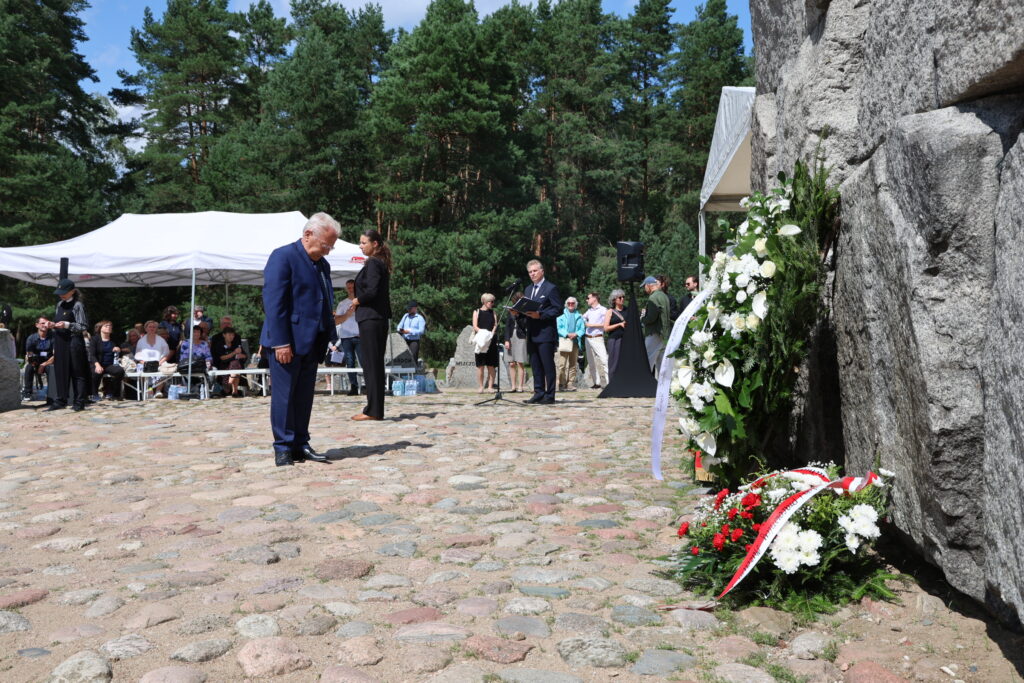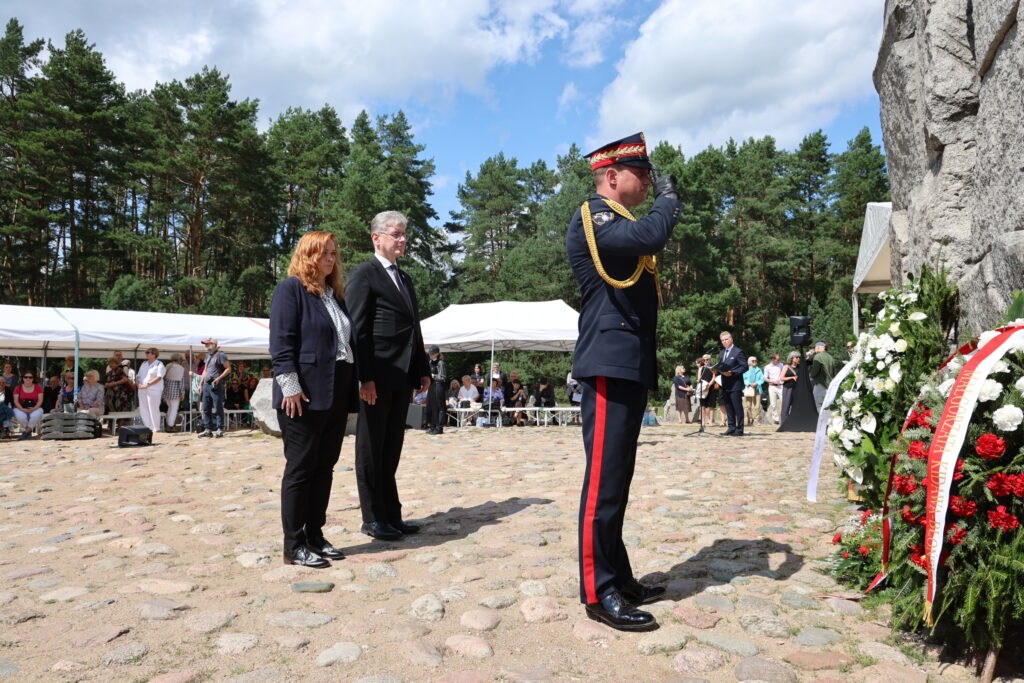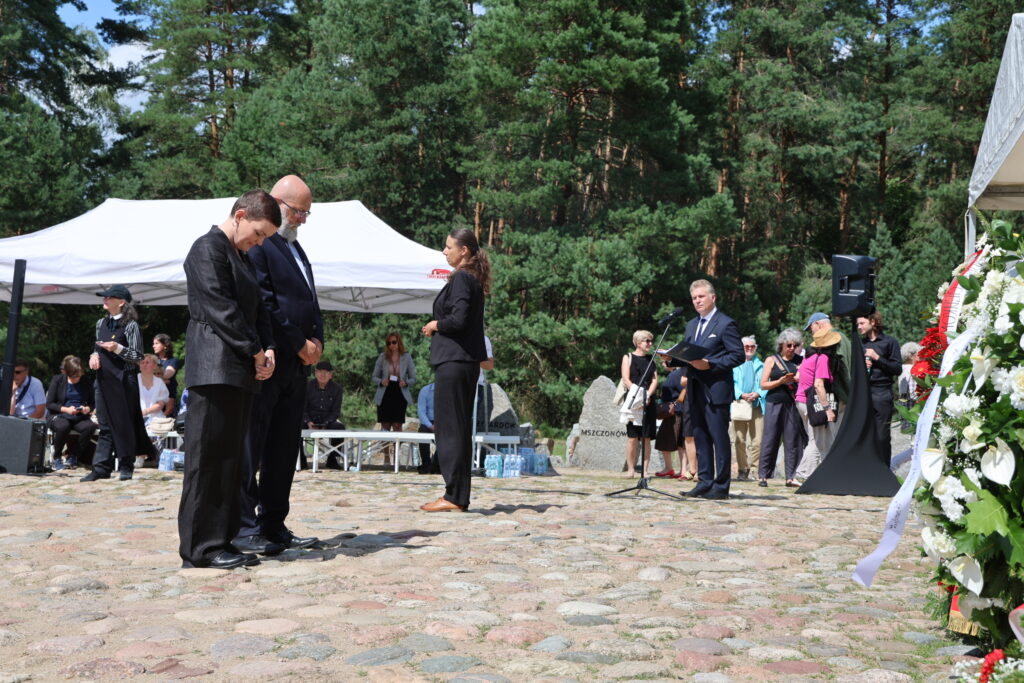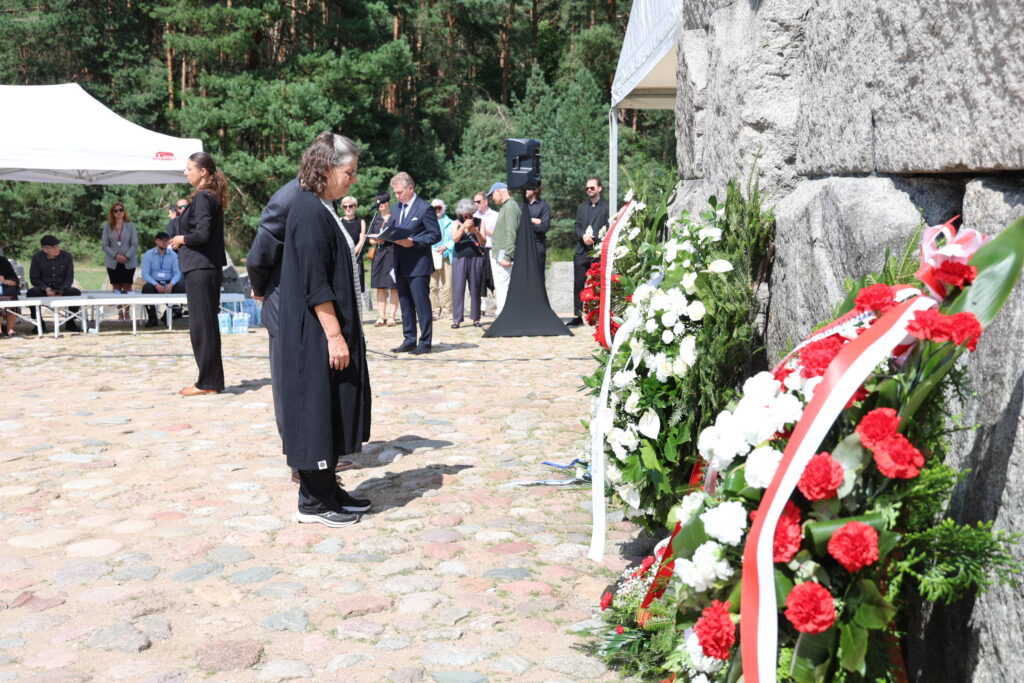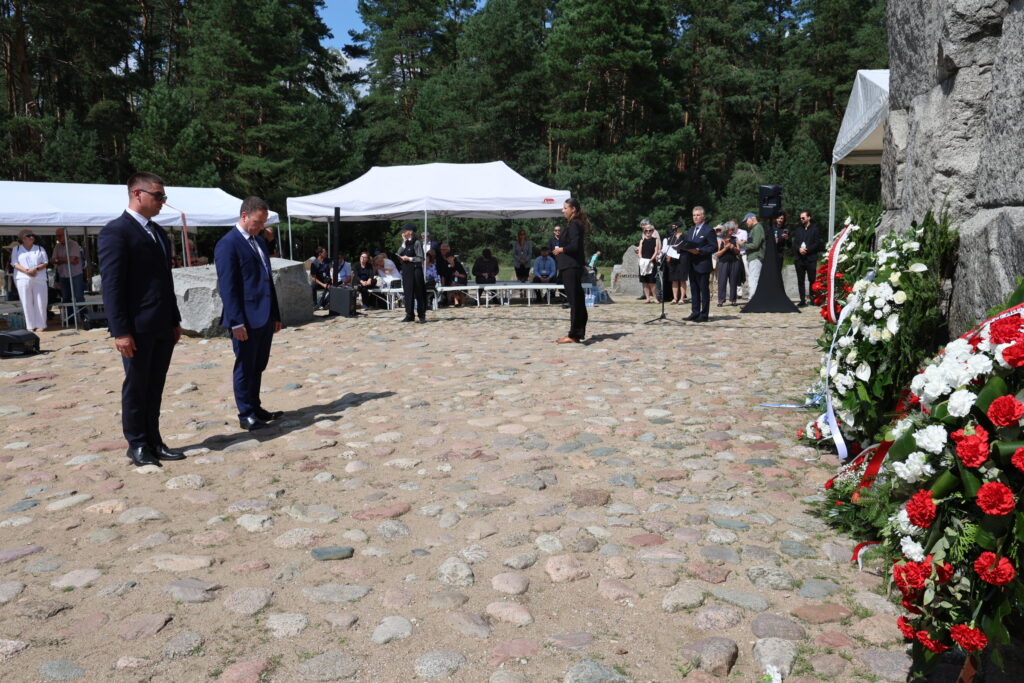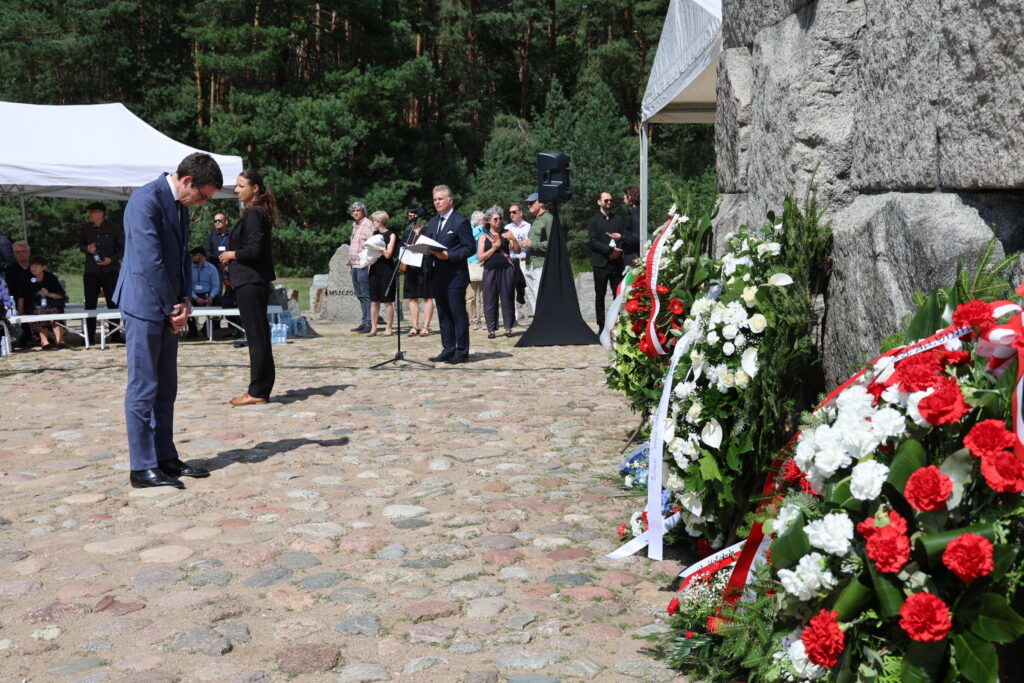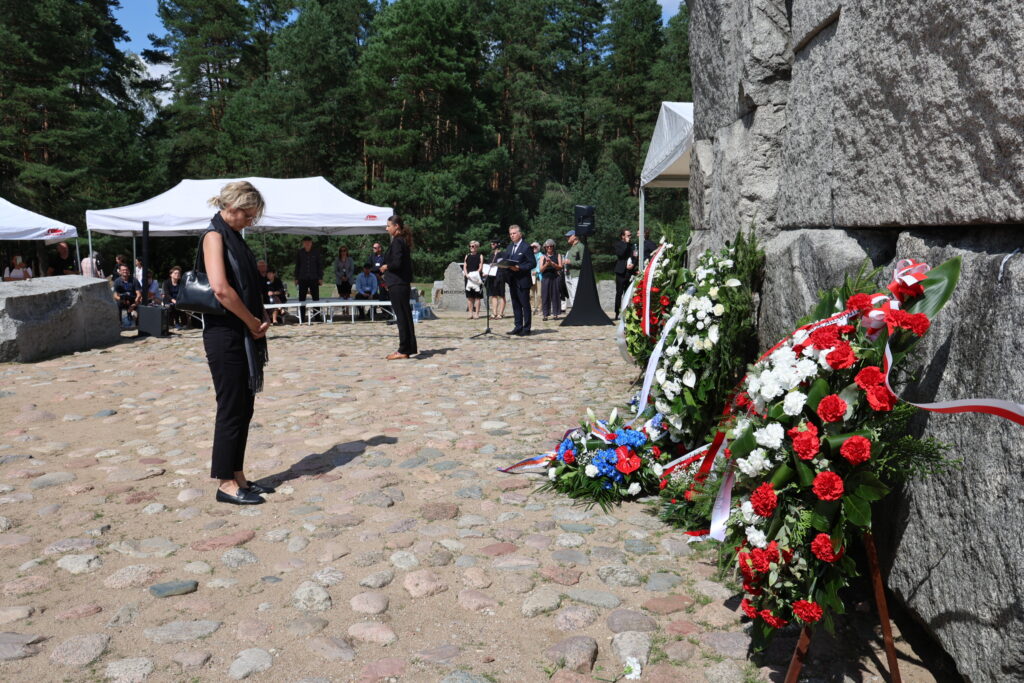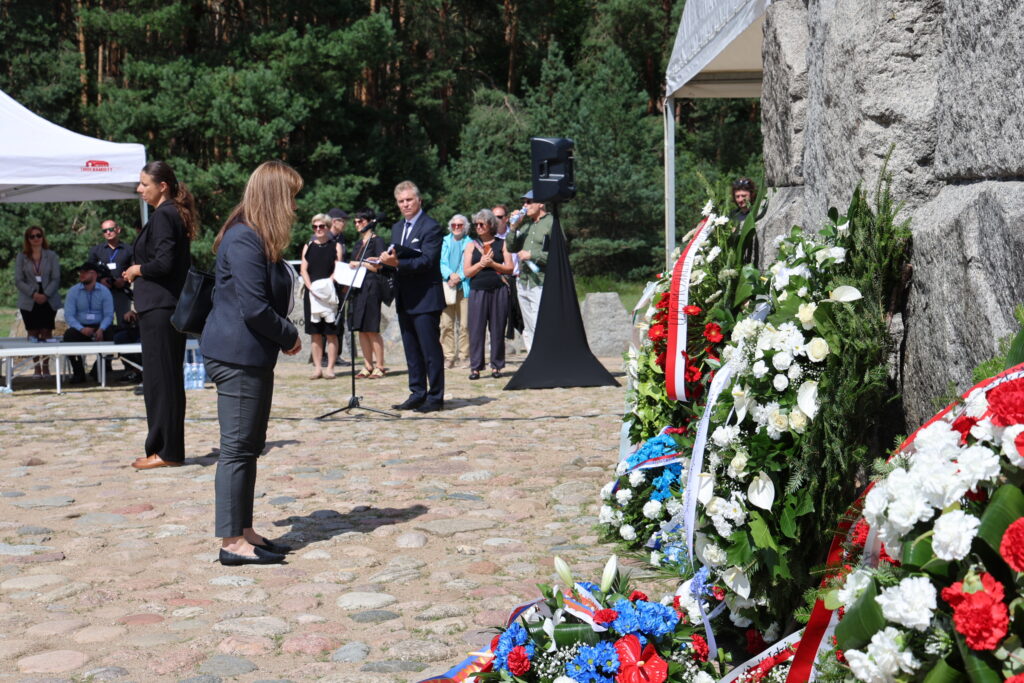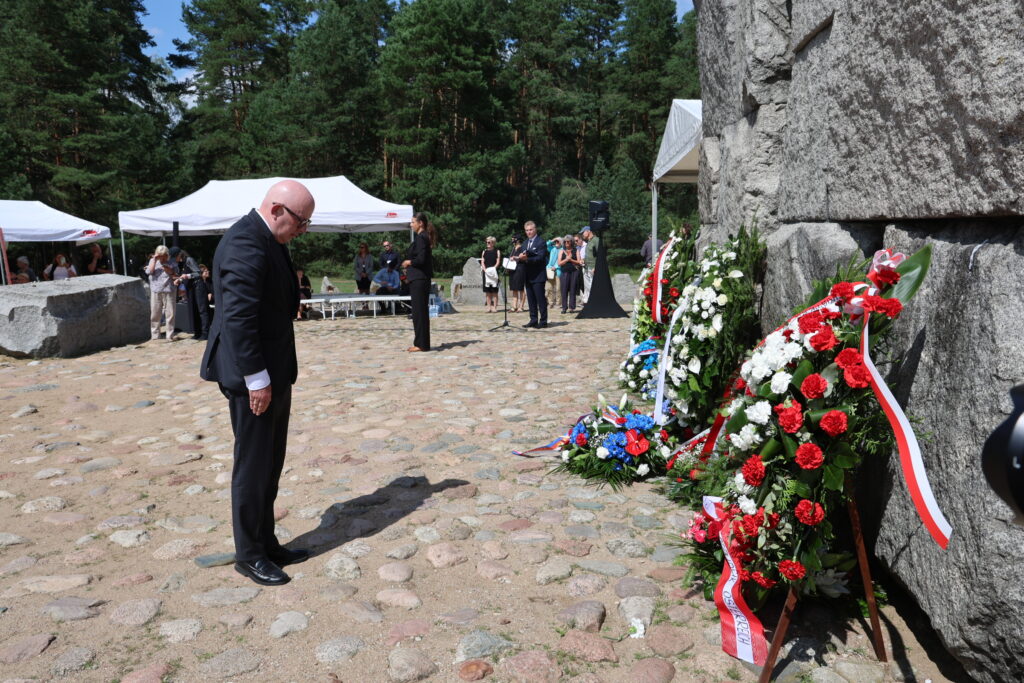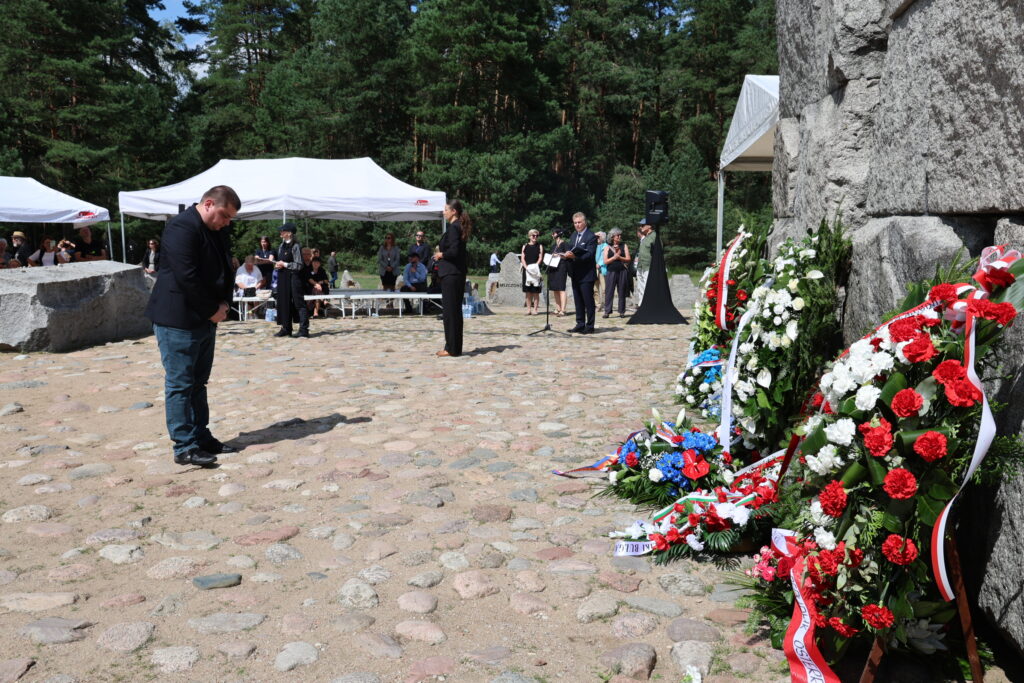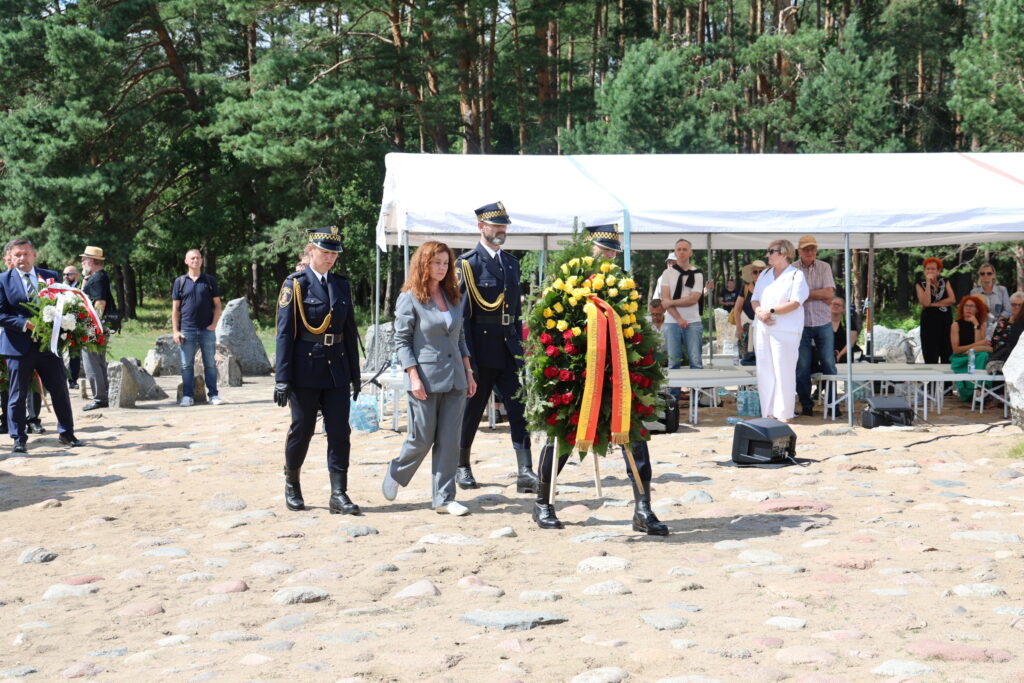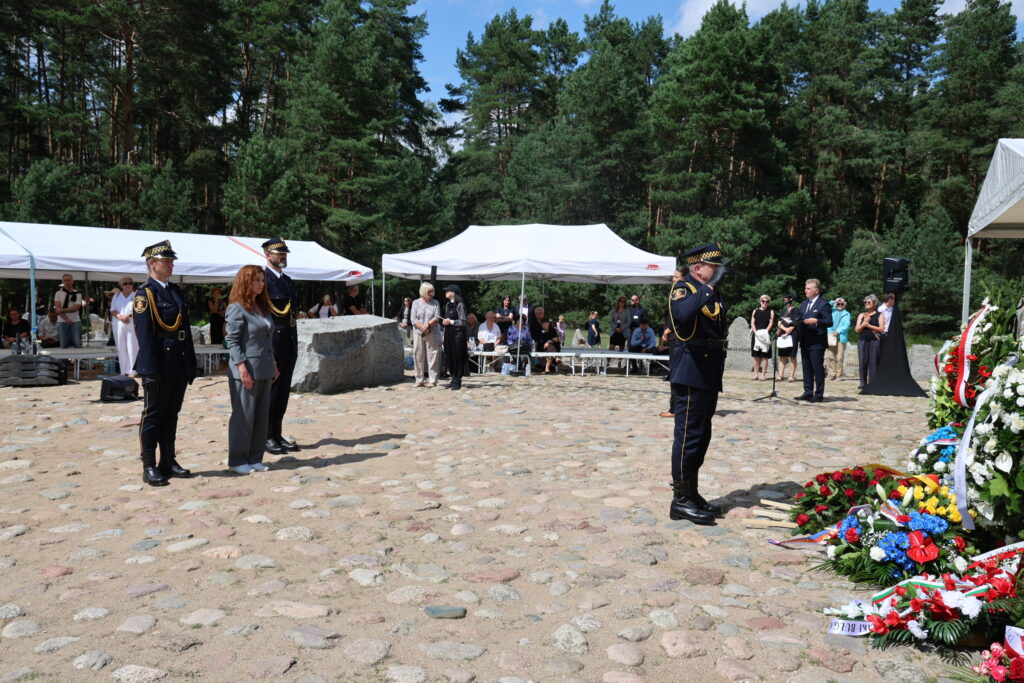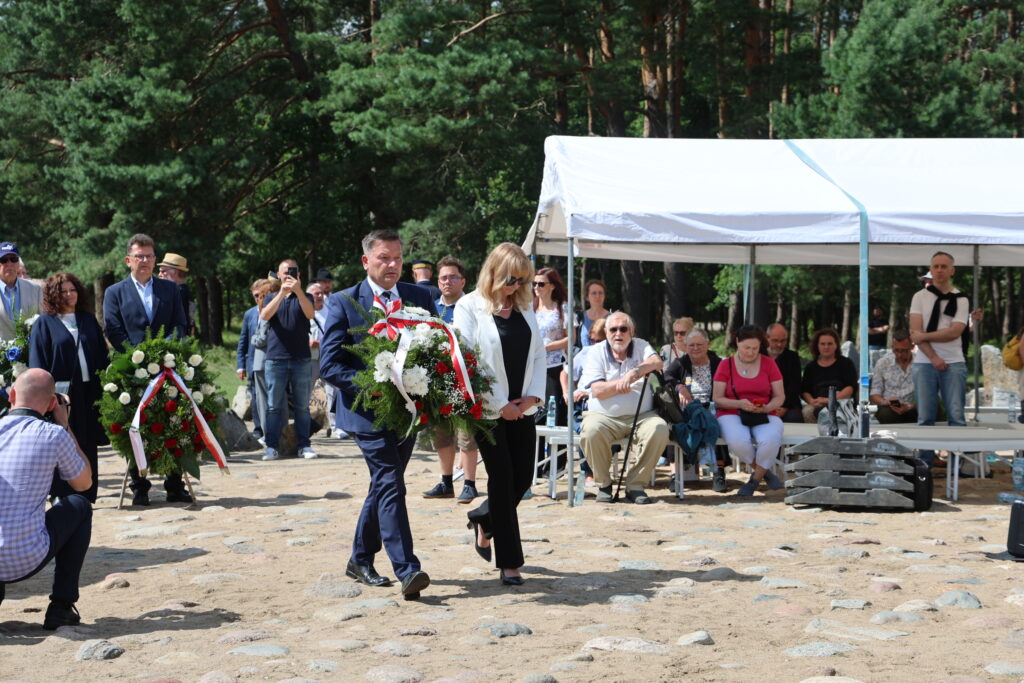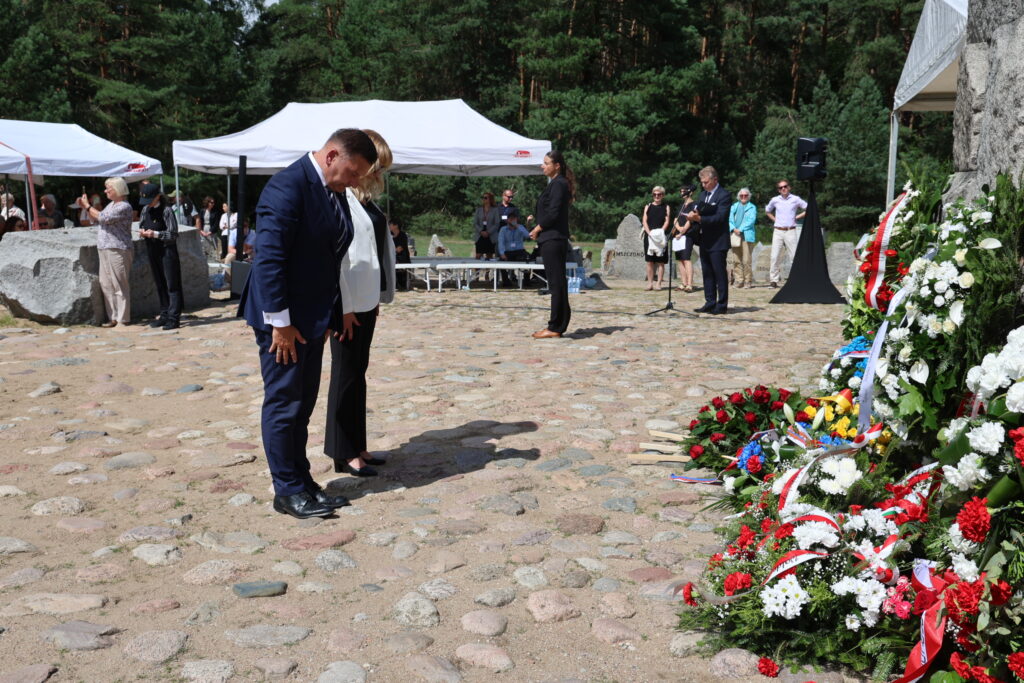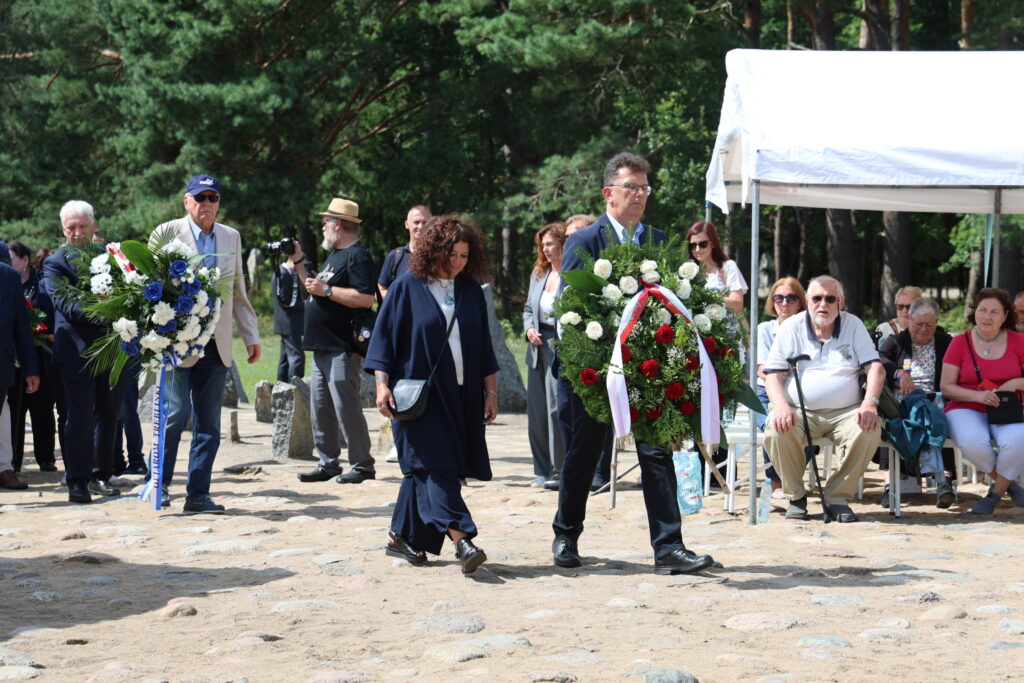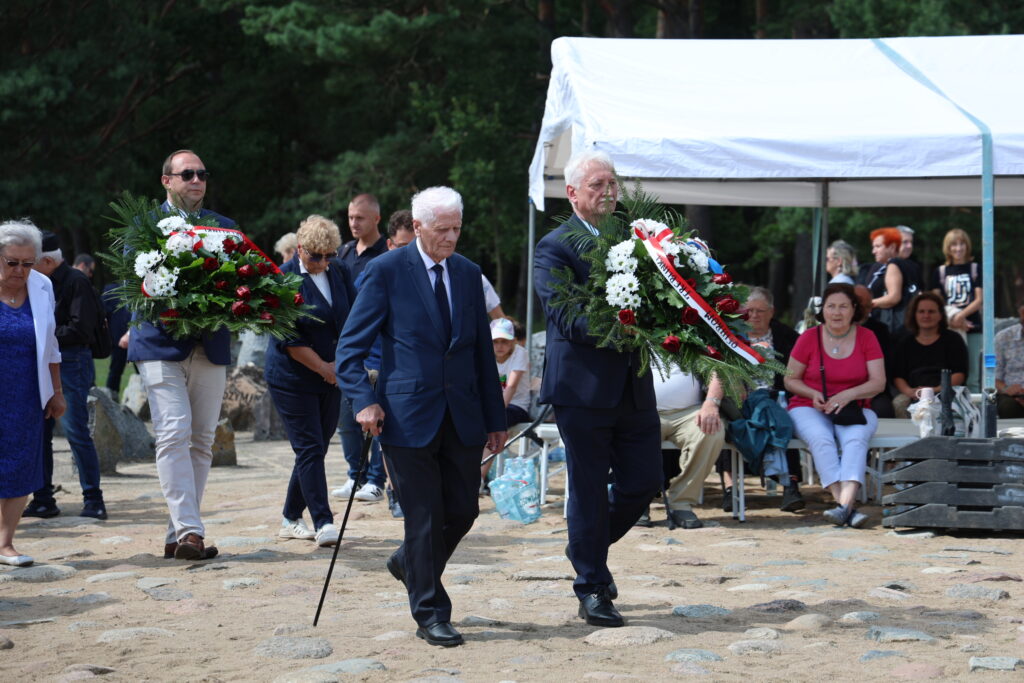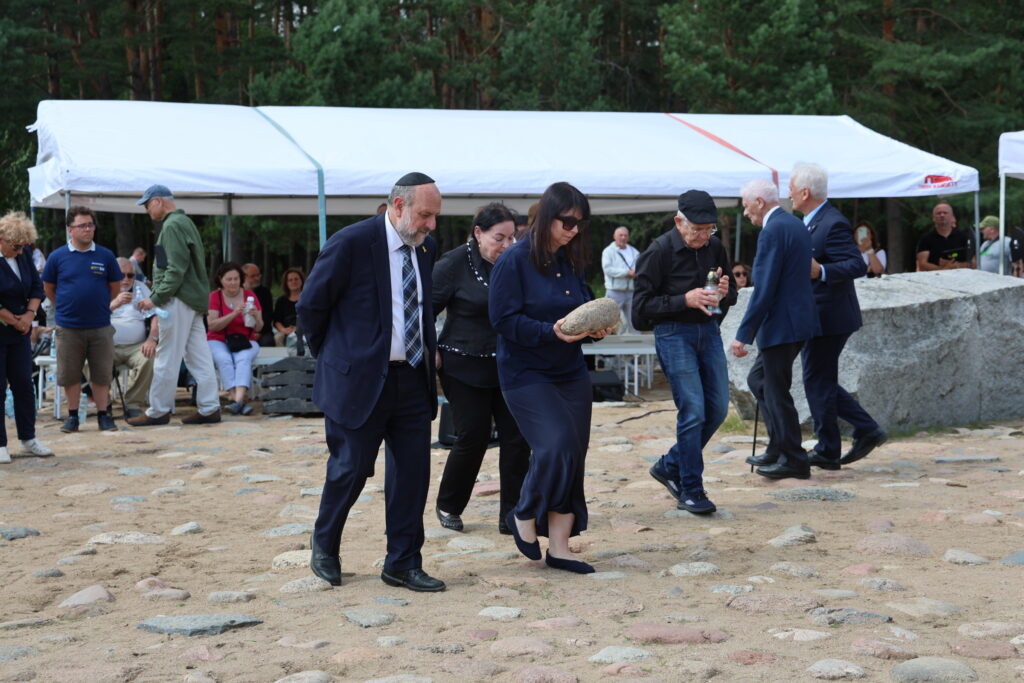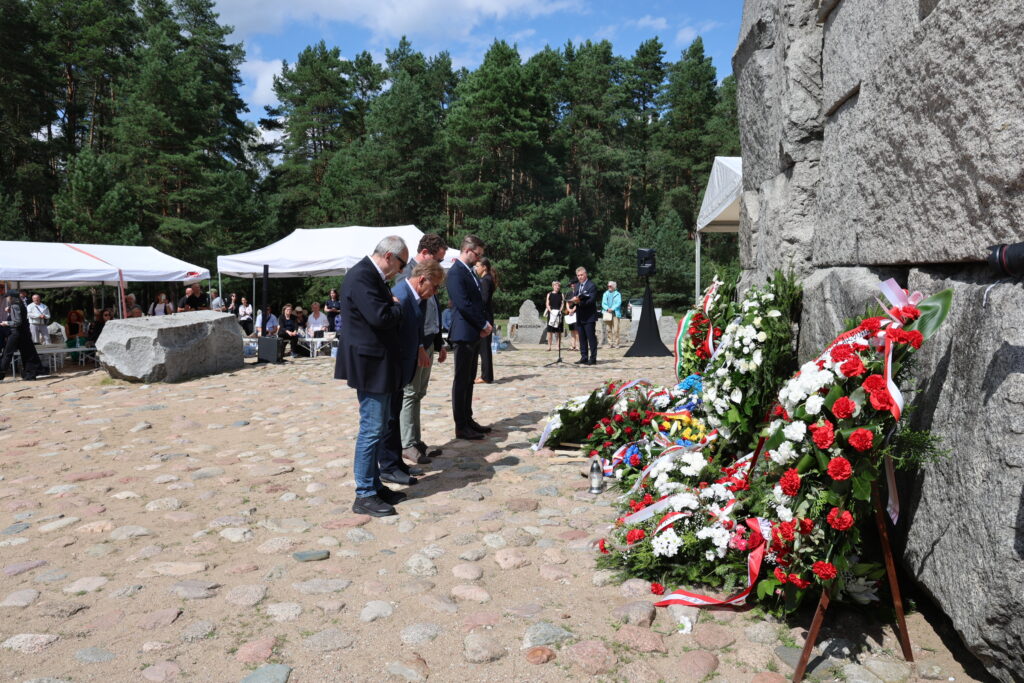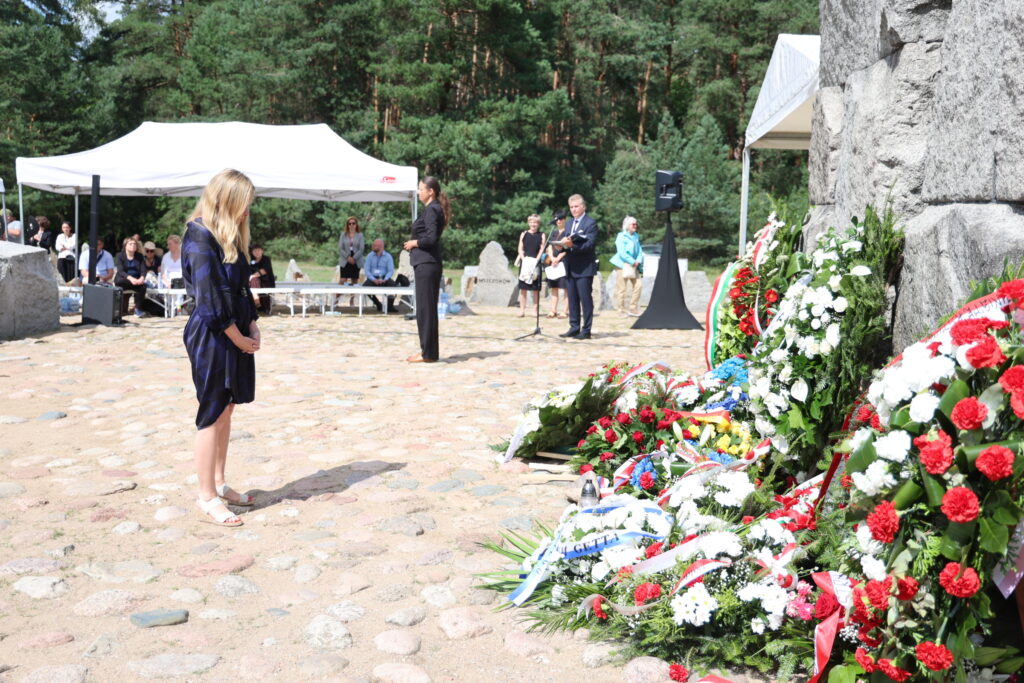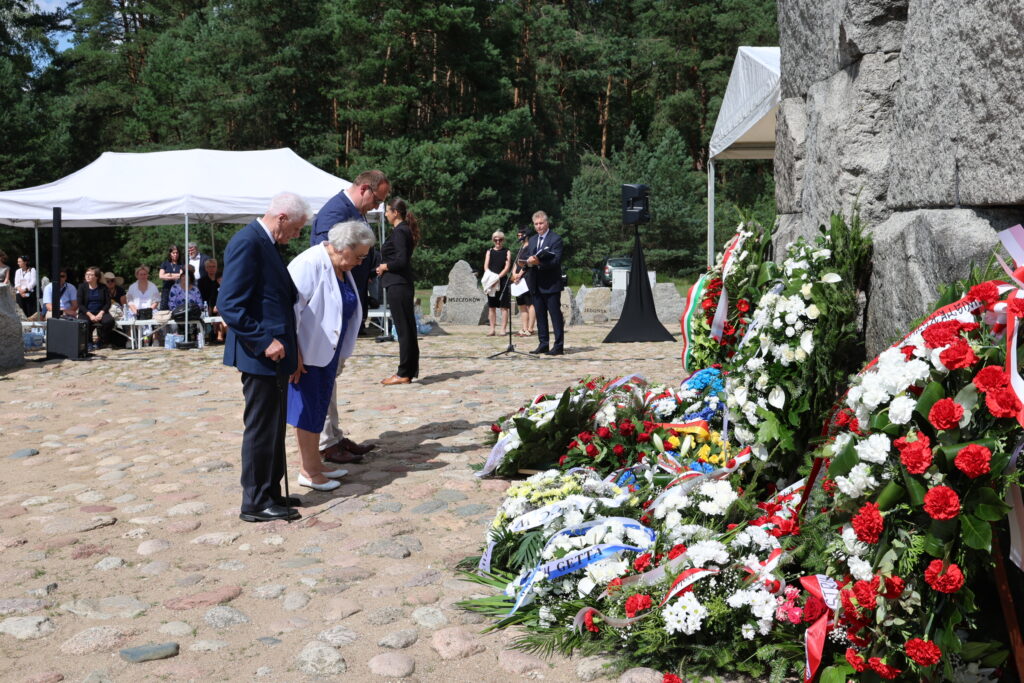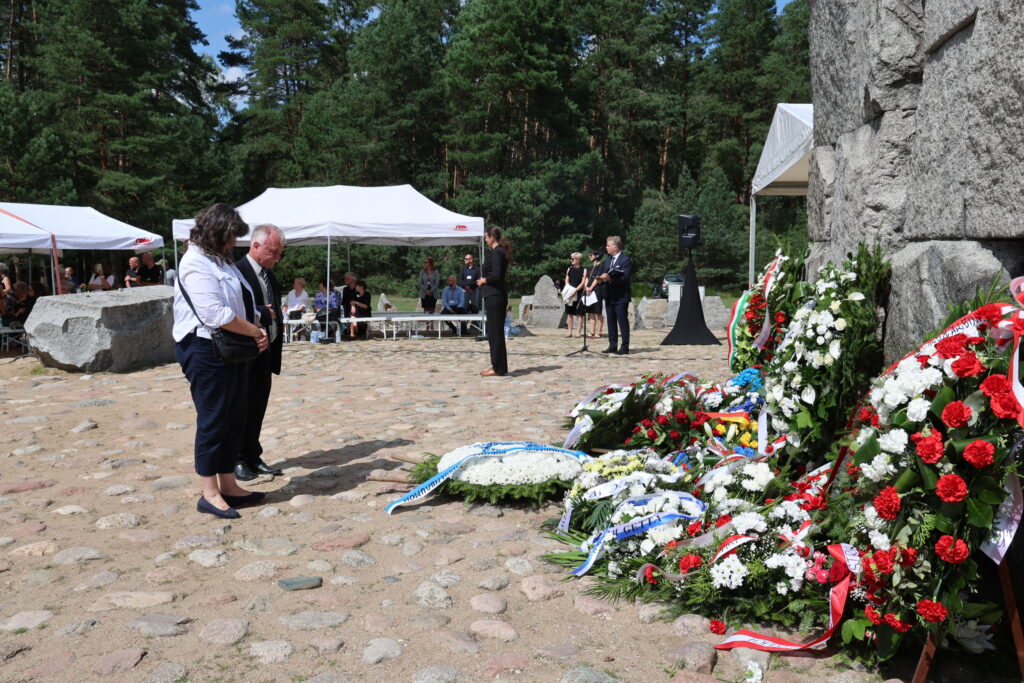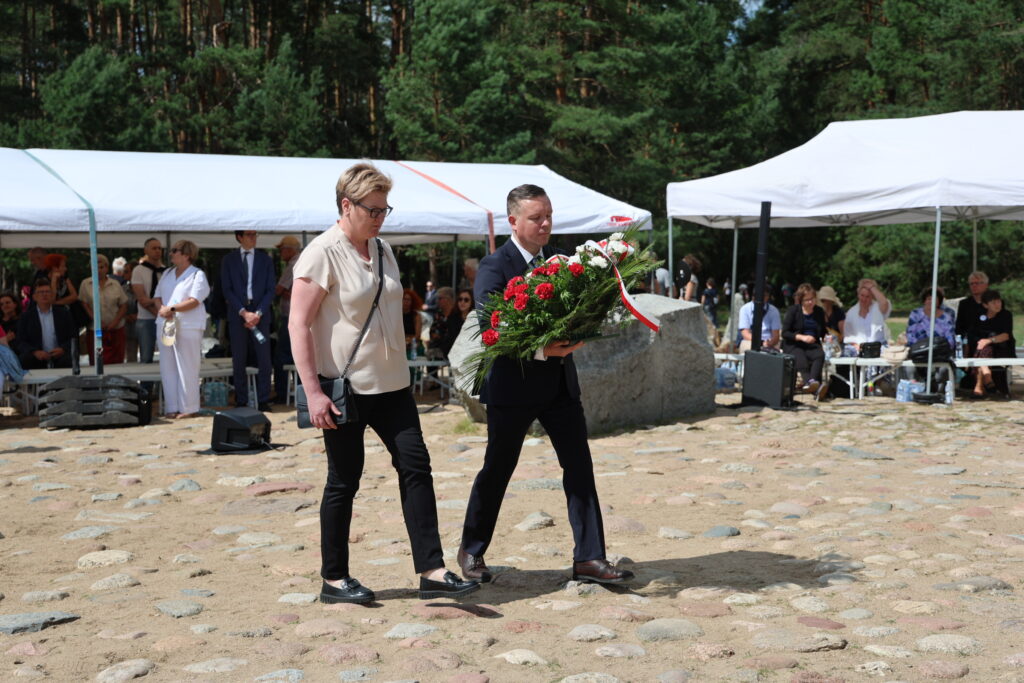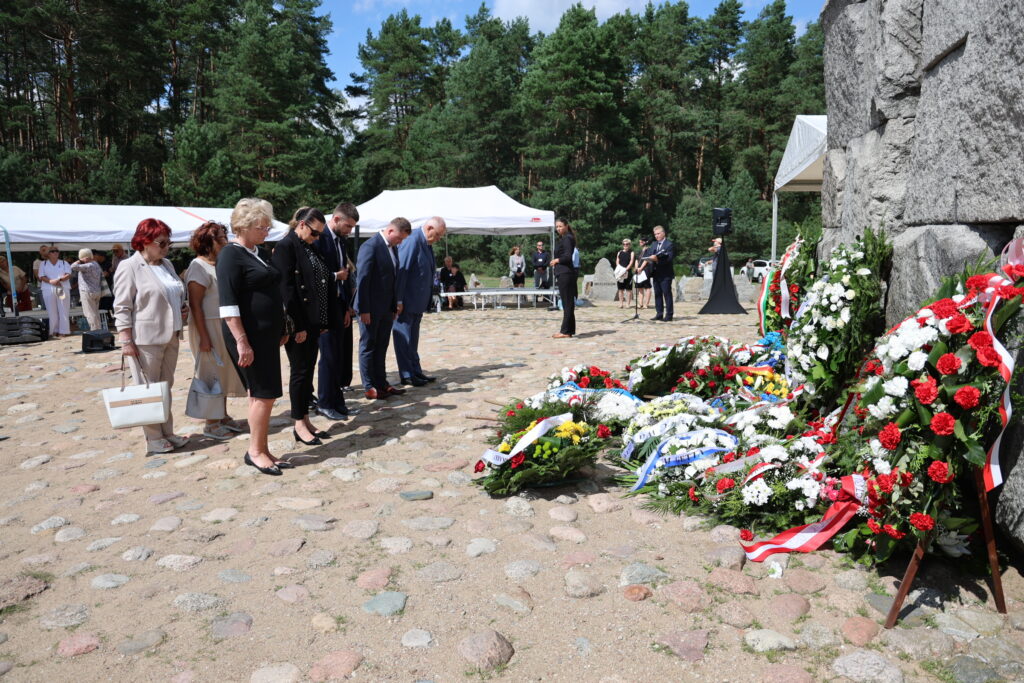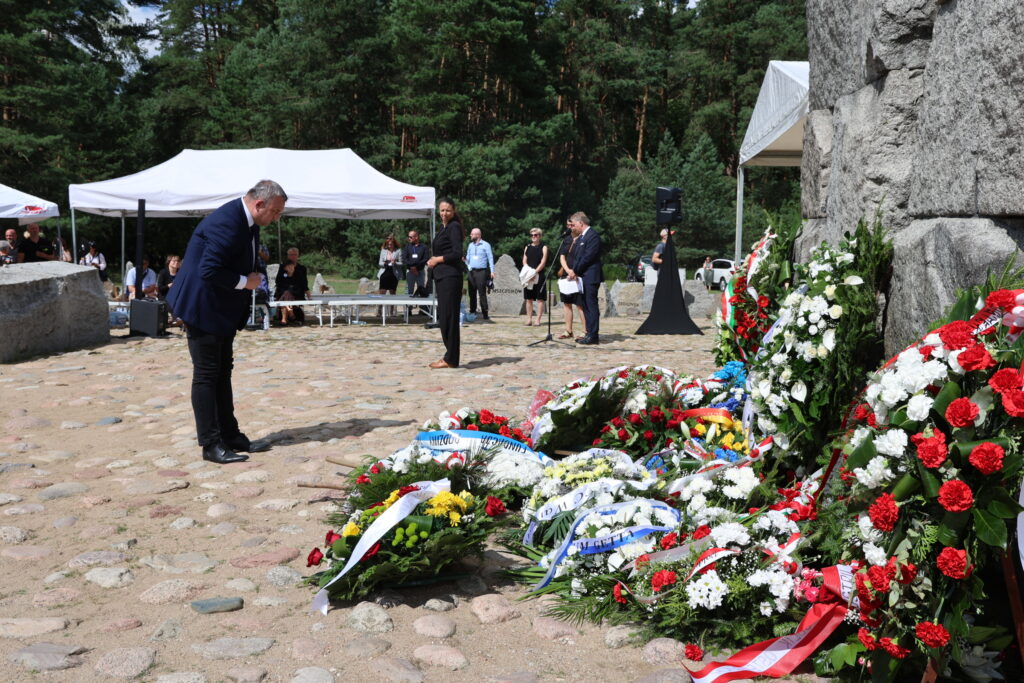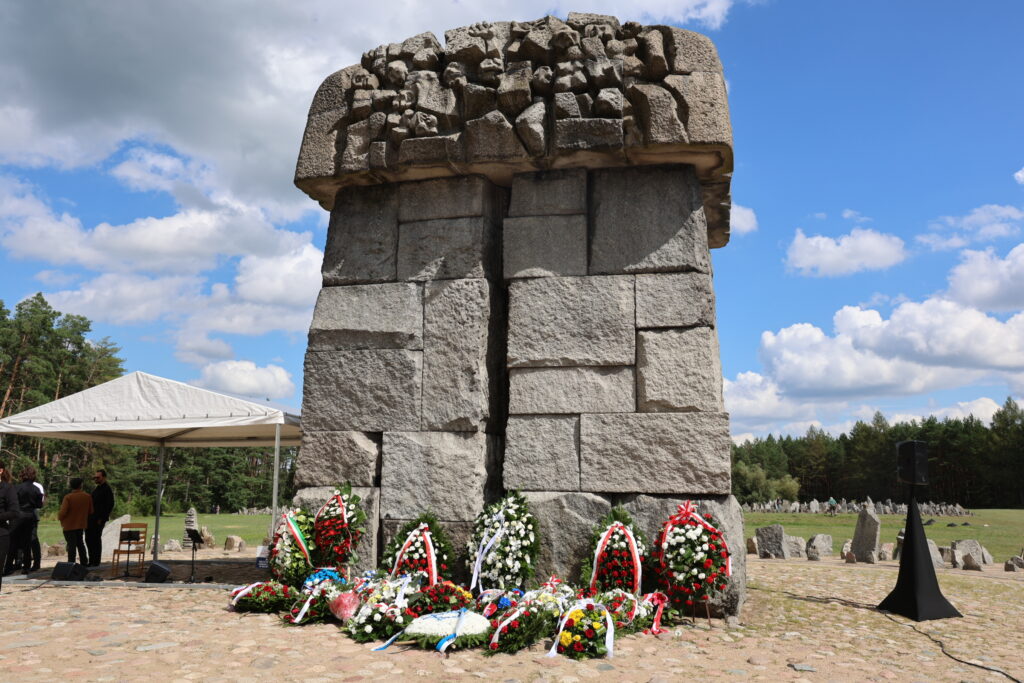



On 4 August, commemorative ceremonies took place to mark the anniversary of the revolt at the Treblinka Extermination Camp. The event was organised by the Emanuel Ringelblum Jewish Historical Institute in cooperation with the Treblinka Museum. On 2 August 1943, shortly before 4:00 p.m., a prisoner revolt broke out at the Treblinka Extermination Camp. At the time, 840 prisoners were held in the camp, 105 of whom did not participate in the uprising. These were people who were already mentally exhausted and resigned. Samuel Willenberg described the escape from the extermination camp as follows:
When we reached the fence, a horrifying sight met our eyes. Bodies were strewn everywhere. Among the tank barriers stood the corpses of prisoners, upright like statues. A mass of human bodies, forming a sort of bridge, lay on the barbed wire and barricades.
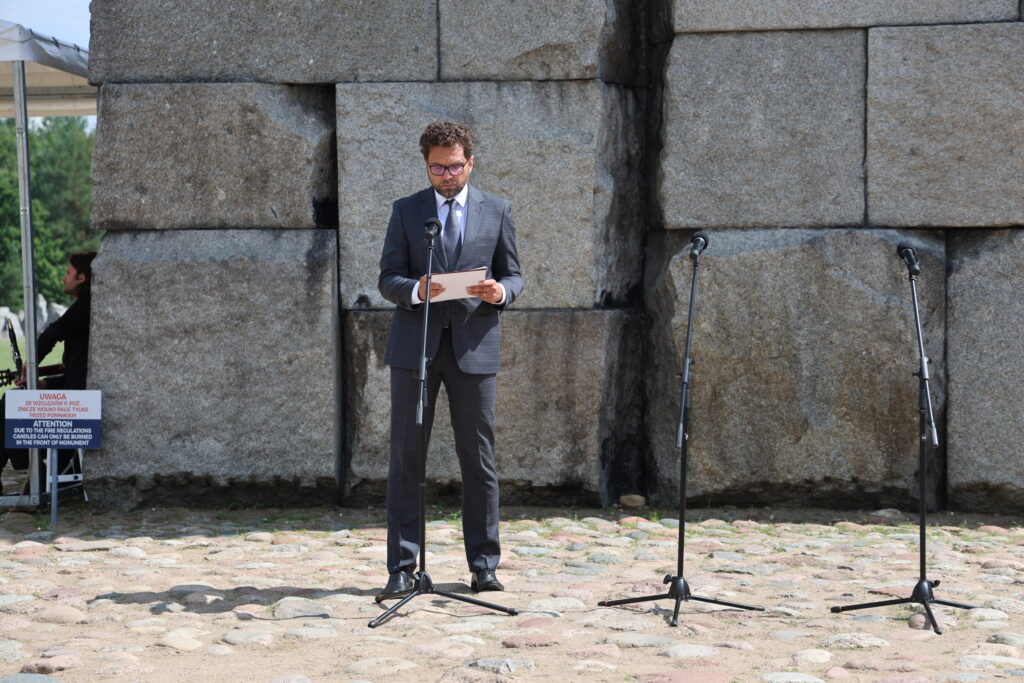
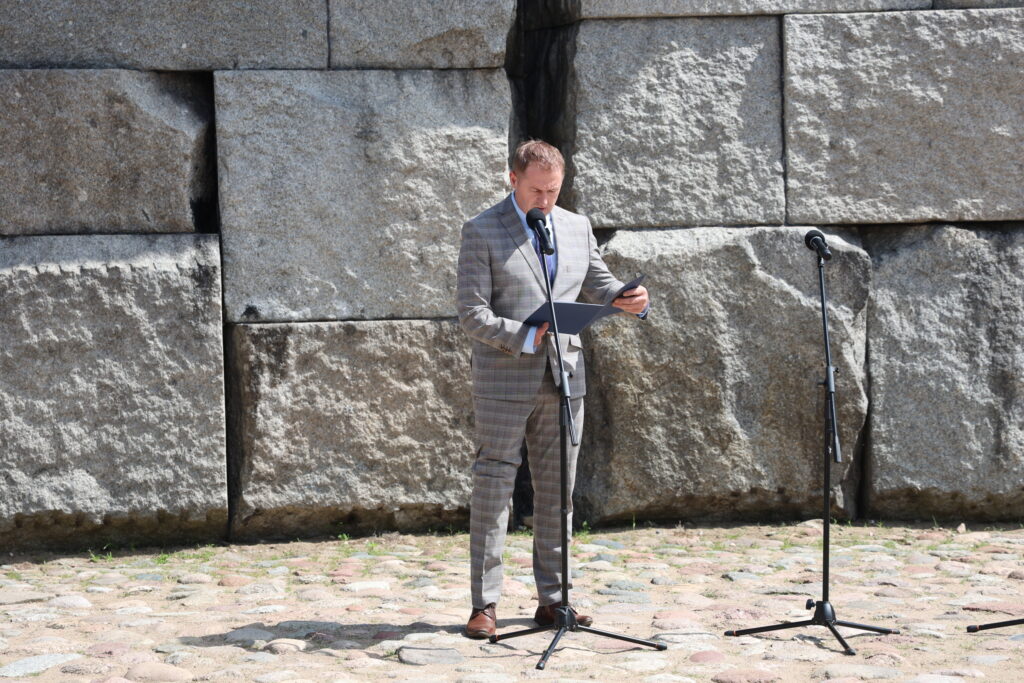
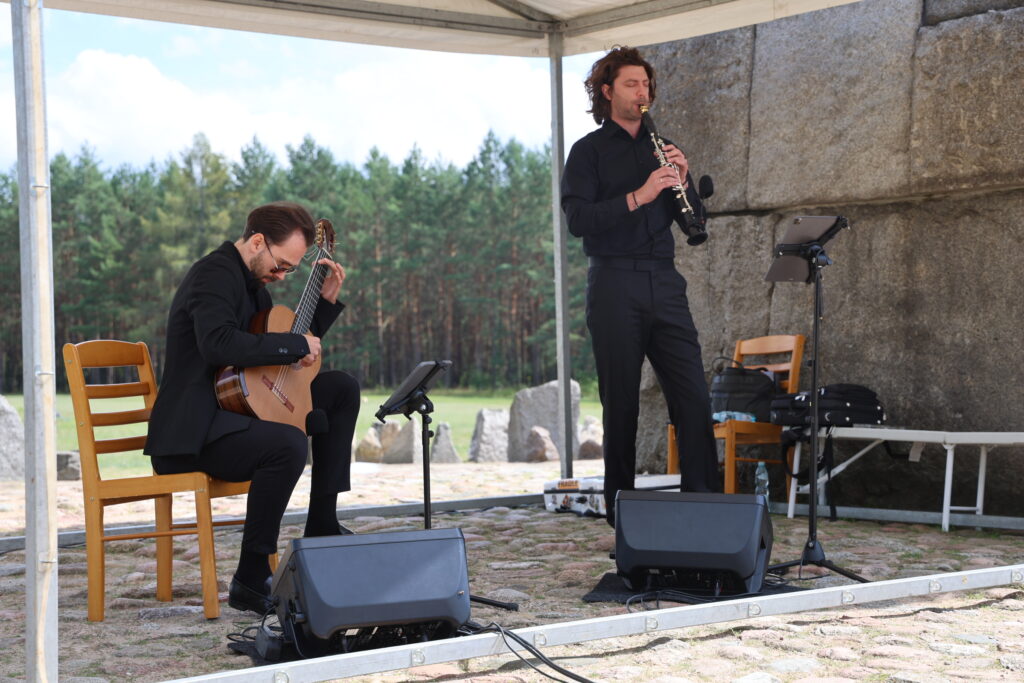
The ceremony at the central monument began with a performance of the “Song of the Treblinka Death Camp”, composed by a former prisoner of the camp, likely an Austrian Jew, Konrad Mann. Some attribute the piece to Artur Gold, a jazz musician and composer. The song was performed by Andrzej Ciepliński and Piotr Przedbora. Dr Michał Trębacz, Director of the Emanuel Ringelblum Jewish Historical Institute, then addressed the gathering. In his speech, he reminded those present:
We meet here every year to pay tribute to the victims of the Treblinka Extermination Camp – nearly one million people murdered here. People whose memory, like that of this place, was meant to vanish. Our presence here, and above all the long-standing work of institutions and organisations engaged in Holocaust history, is the best proof that it has not.
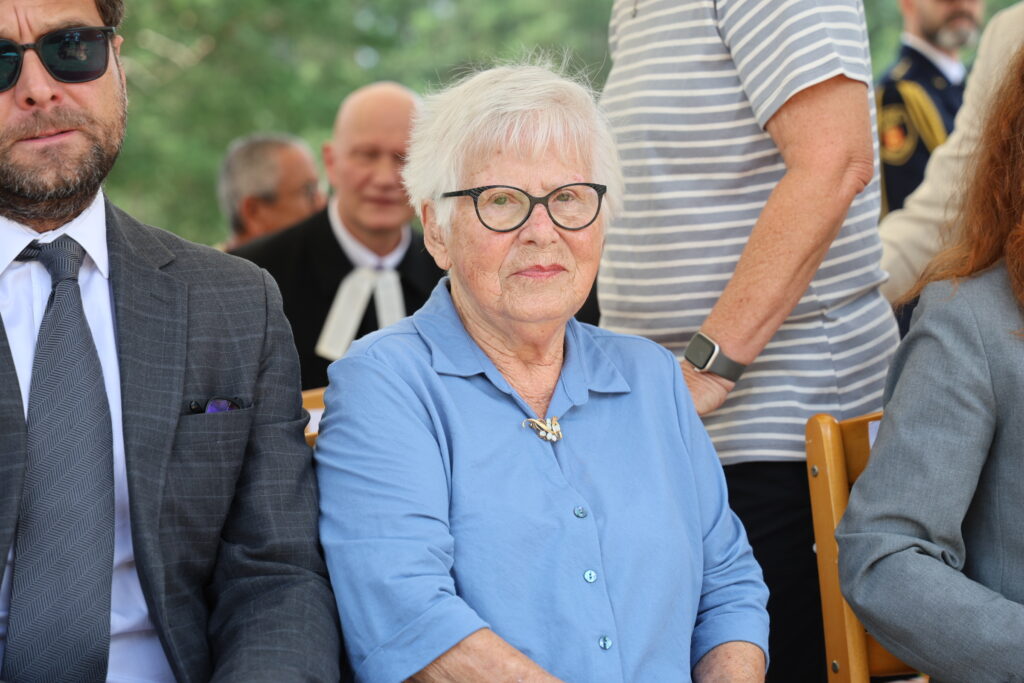
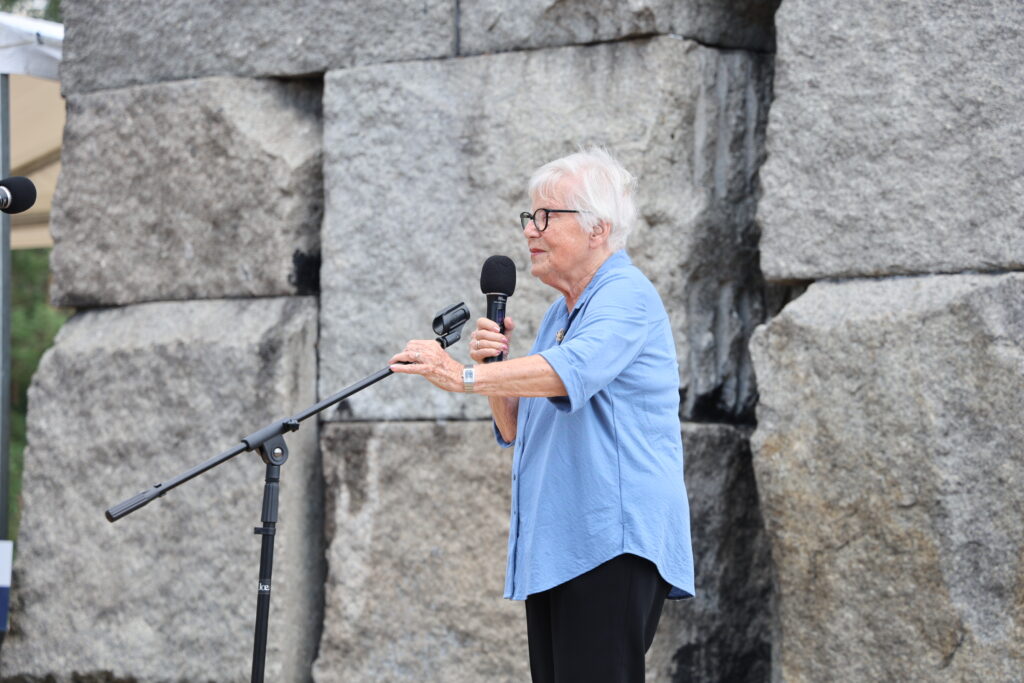
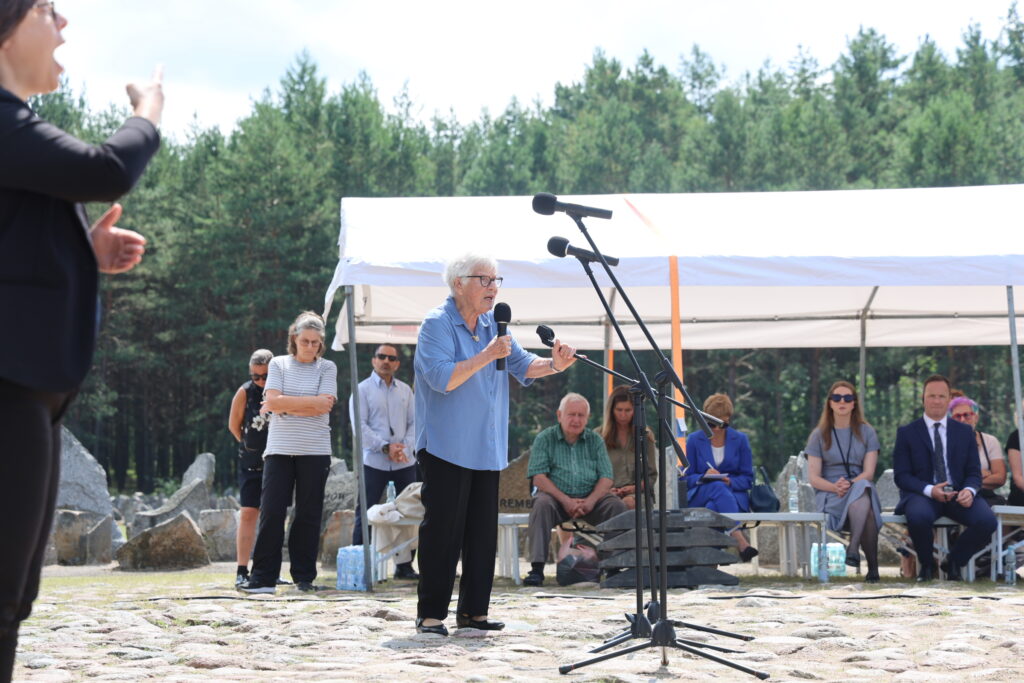
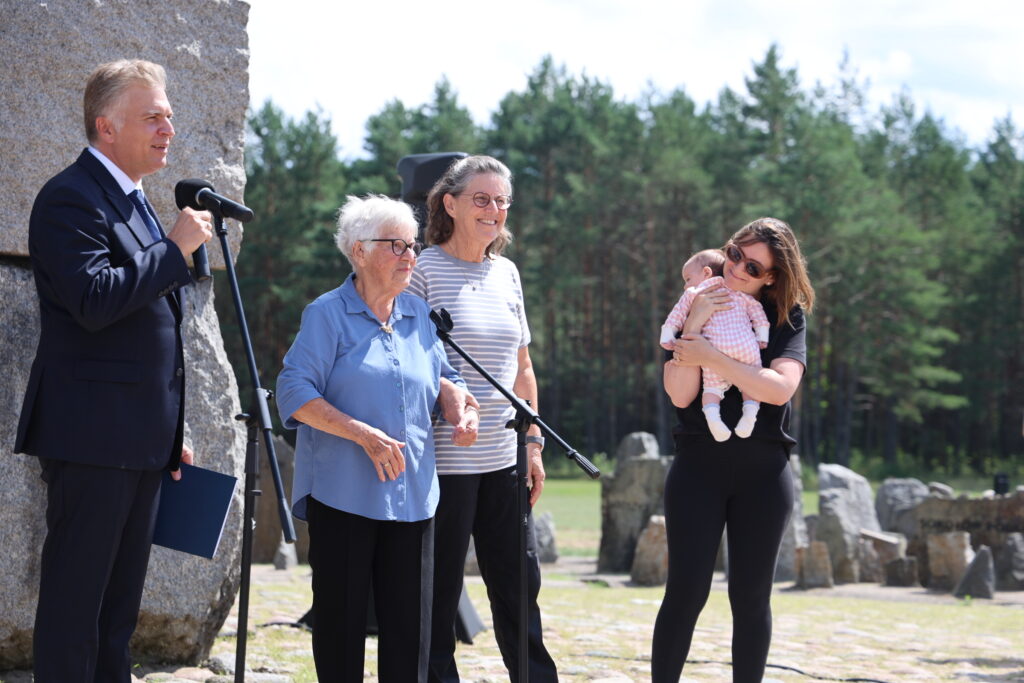
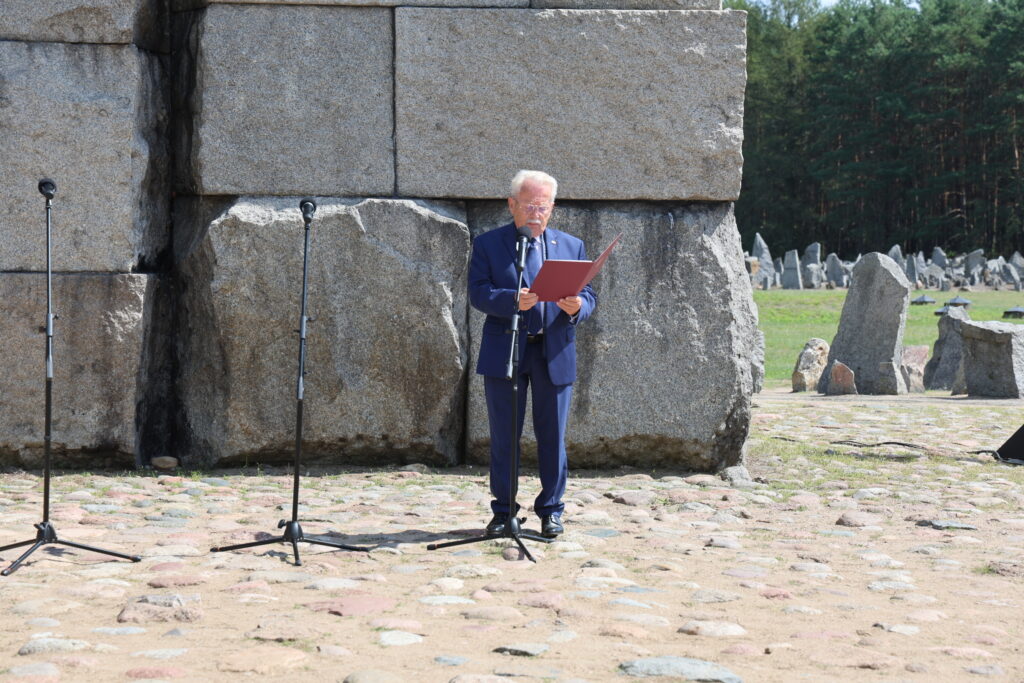
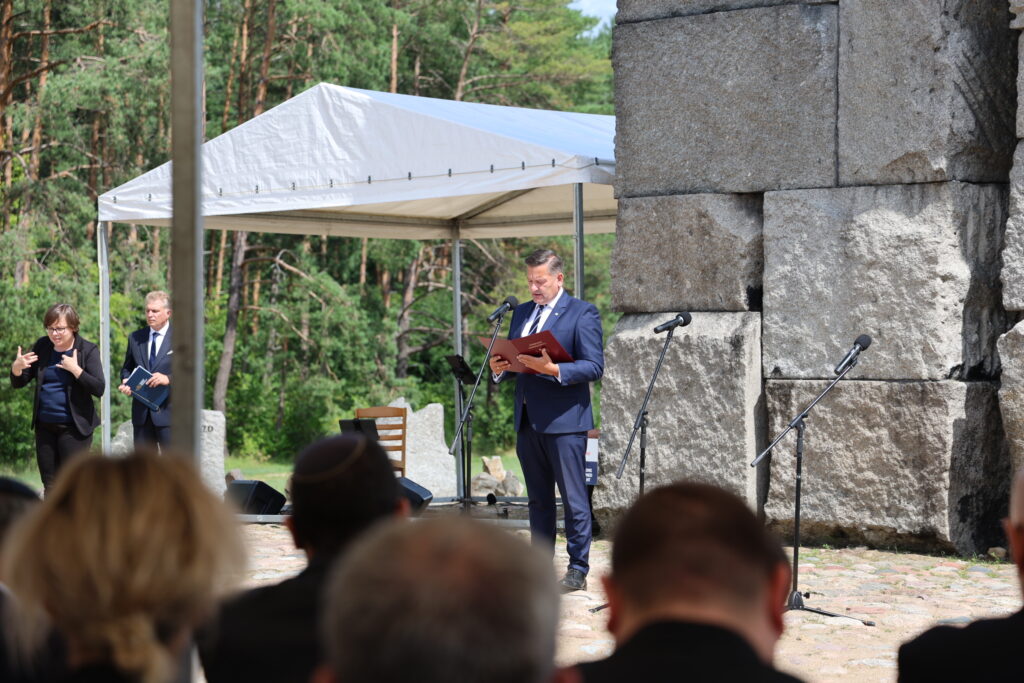
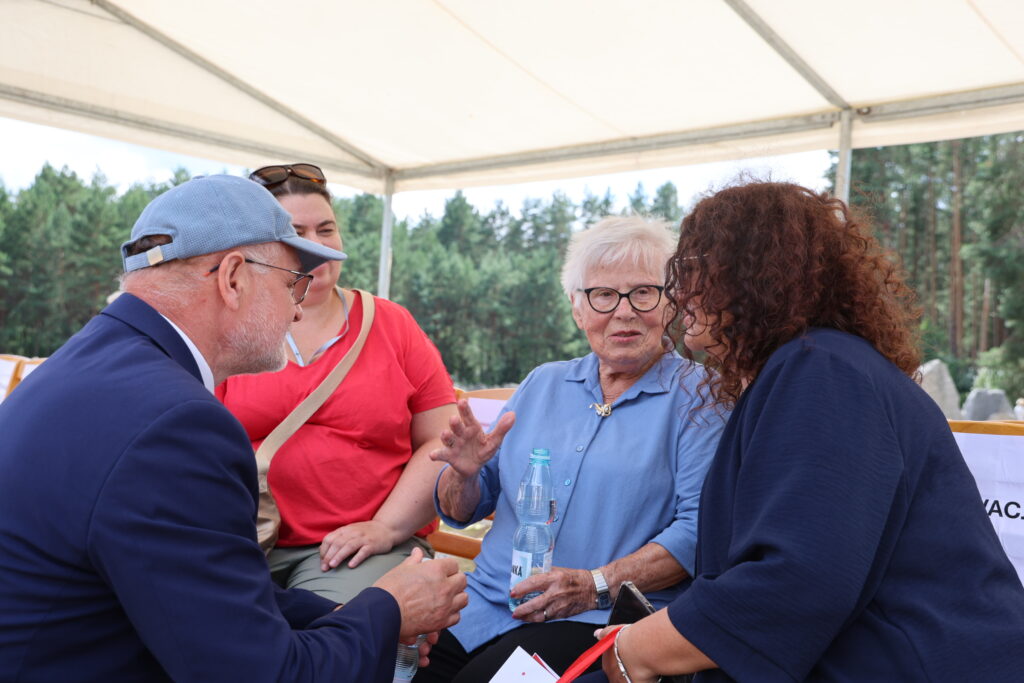
Ada Willenberg, Holocaust survivor and widow of Samuel Willenberg, a former prisoner of Treblinka, also spoke. She thanked those gathered for attending and emphasised that Treblinka is a family cemetery for her – this is where her closest relatives were murdered, and where her husband Samuel was imprisoned for 10 months. Further speakers included: Tadeusz Deszkiewicz, Secretary of State in the Chancellery of the President of the Republic of Poland, who read a letter from President Andrzej Duda, expressing gratitude, among others, to the Treblinka Museum for its dedicated work in commemorating the victims of German crimes. Maciej Żywno, Deputy Marshal of the Senate of the Republic of Poland, who read a letter on behalf of Senate Marshal Małgorzata Kidawa-Błońska. Marta Cienkowska, Minister of Culture and National Heritage of Poland, who thanked, among others, the organiser – Marshal of the Mazovian Voivodeship, Adam Struzik – for his particular sensitivity and care for this site. Jaakov Finkelstein, Ambassador of Israel. Aldona Machnowska-Góra, Deputy Mayor of the City of Warsaw. Sylwester Rytel-Adrianik, Sokołów District Councillor, who read a letter from Senator Waldemar Kraska. Zbigniew Czerkas, who read a letter from Adam Góral, District Governor of Sokołów District.
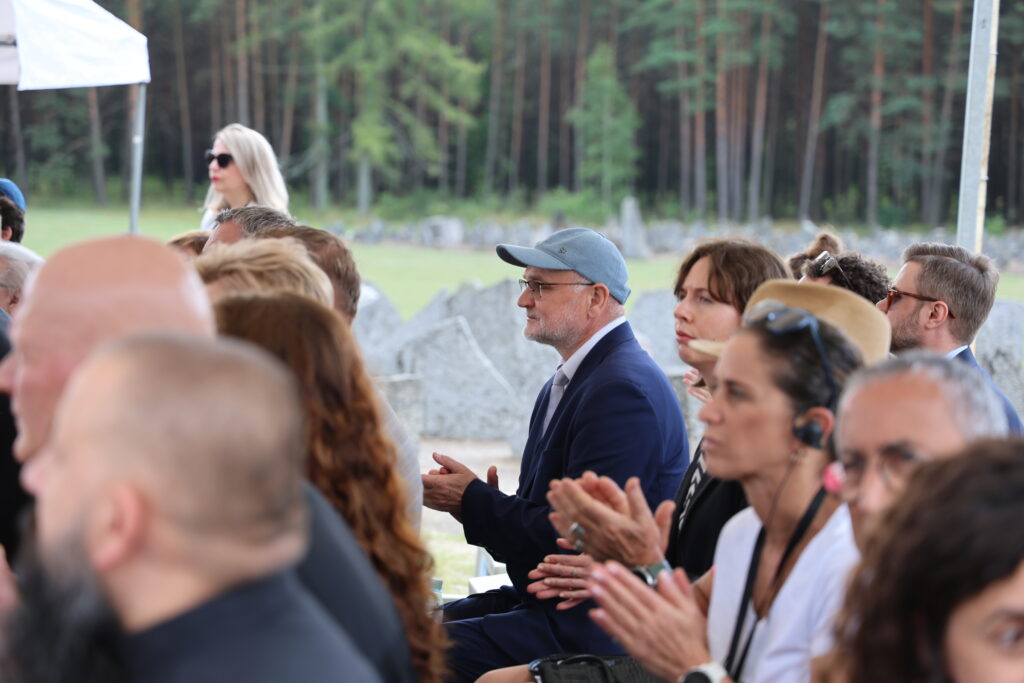
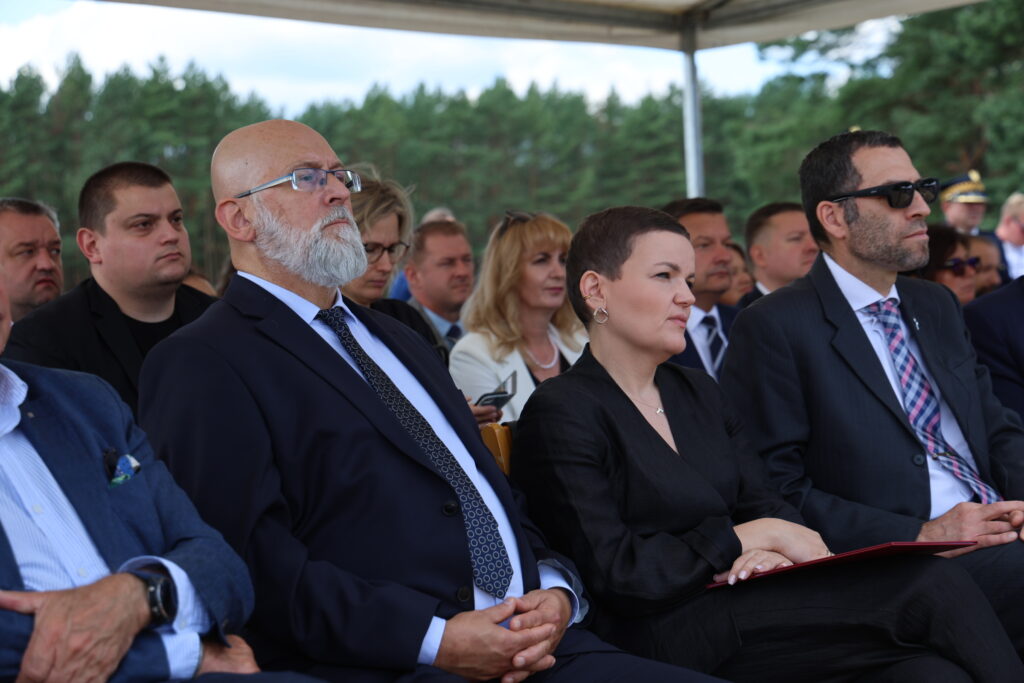
Among the attendees were:
1. Zuzanna Schnepf-Kołacz – Deputy Director for Programming at the Jewish Historical Institute.
2. Craig Mills – Counsellor at the British Embassy.
3. Luigi Ripamonti – Chargé d’Affaires, and Alessia Giovannini – Second Secretary, Embassy of Italy.
4. Karolína Ščerbej – Second Secretary, Embassy of the Czech Republic.
5. Katarzyna Dragan, Political Affairs Assistant, and Beata Milewska, Cultural Affairs Officer, Embassy of the United States of America.
6. Thorsten Kerpa – Deputy Head of the Cultural Department, Embassy of the Federal Republic of Germany.
7. Terezia Filipejova – Third Secretary, Embassy of Slovakia.
8. Arnold Obermayr, representing the Embassy of Austria and the Austrian Cultural Forum.
9. Jan Łazicki, Plenipotentiary of the Minister of Foreign Affairs for Contacts with the Jewish Diaspora.
10. Aldona Machnowska-Góra – Deputy Mayor of Warsaw.
11. On behalf of Senator Waldemar Kraska – County Distrcit Sylwester Rytel-Andrianik.
12. Przemysław Romaniuk – Deputy Head of the Regional Office of the Lustration Bureau in Warsaw, and Ms Blanka Kamińska-Pienkos, Senior Specialist, on behalf of the President of the Institute of National Remembrance, Dr Karol Nawrocki.
13. Jan Okulicz-Kozaryn – Chair of the Association of Jewish Combatants.
14. Adam Krzysztof-Dudziński – Polish Society of the Righteous Among the Nations.
15. A delegation of the Association of Polish Combatants and Former Political Prisoners: Elżbieta Sadzyńska – Secretary General of the Main Board, Józef Maliński – Treasurer, Krzysztof Rinas.
16. Sylwia Kędzierska-Jasik – Chairwoman of the Board of the Jewish Religious Community in Warsaw, and Grażyna Majer – Board Member.
17. Stanisław Stankiewicz – President of the Central Council of Roma.
18. A delegation of the Association of the Jewish Historical Institute of Poland: Piotr Wiślicki, Zygmunt Stępiński, Michał Majewski, and others.
19. Katarzyna Person – Warsaw Ghetto Museum.
20. Ewa Cieplińska-Libner – Jewish Community Center, member of the board.
21. Renata Wójtiuk-Janusz and Wojciech Łygaś – Nissenbaum Family Foundation.
22. Karolina Kolbuszewska, Director – Pilecki Family House Museum.
23. Paweł Nasiłowski – Deputy Mayor of the Town and Municipality of Kosów Lacki, and Urszula Wesołowska – Kosów Lacki Town Office.
24. Paweł Pniewski – Second Deputy Mayor of the Town of Marki.
25. Aleksandra Kuriata and Adam Dudziński – representatives of the families of the Righteous Among the Nations.
26. Stanisław Stankiewicz – President of the Central Council of Roma.
27. Piotr Rypson – Director of the Department of Cultural Heritage at the Ministry of Culture and National Heritage.
28. Renata Wójtiuk-Janusz – Board Member, and Wojciech Łygaś – Assistant to the Board, Nissenbaum Family Foundation.
29. Zbigniew Niziński – President and Founder of the “Memory That Endures” Foundation.
30. Paweł Sawicki – “Memory of Treblinka” Foundation.
31. Piotr Bujnowski.
32. Hanna Przesmycka – Headmistress of the School Complex in Kosów Lacki.
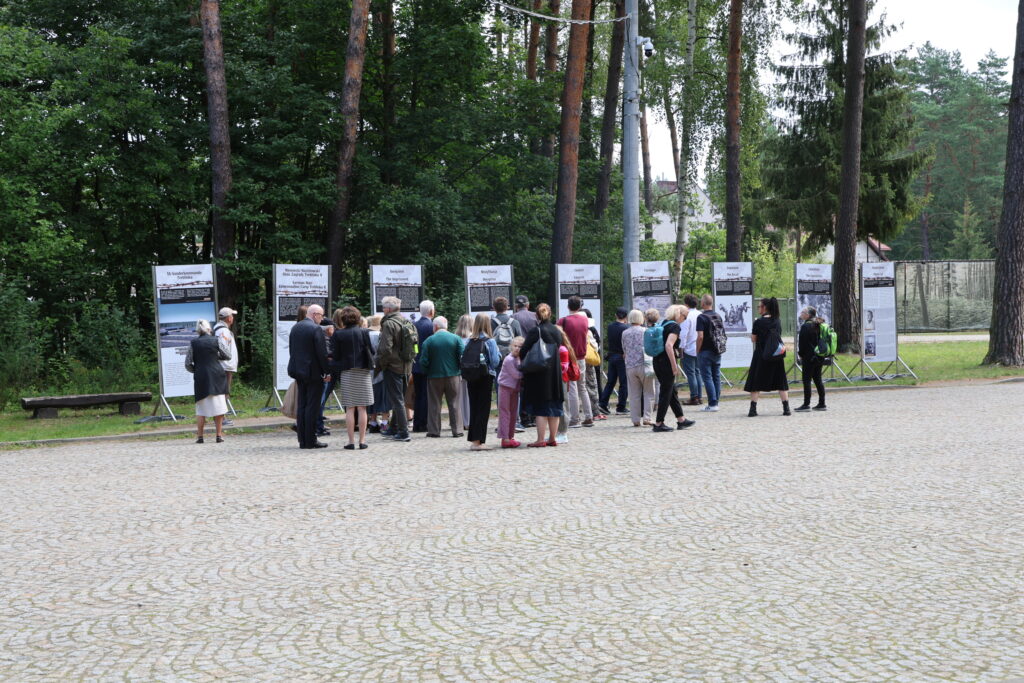
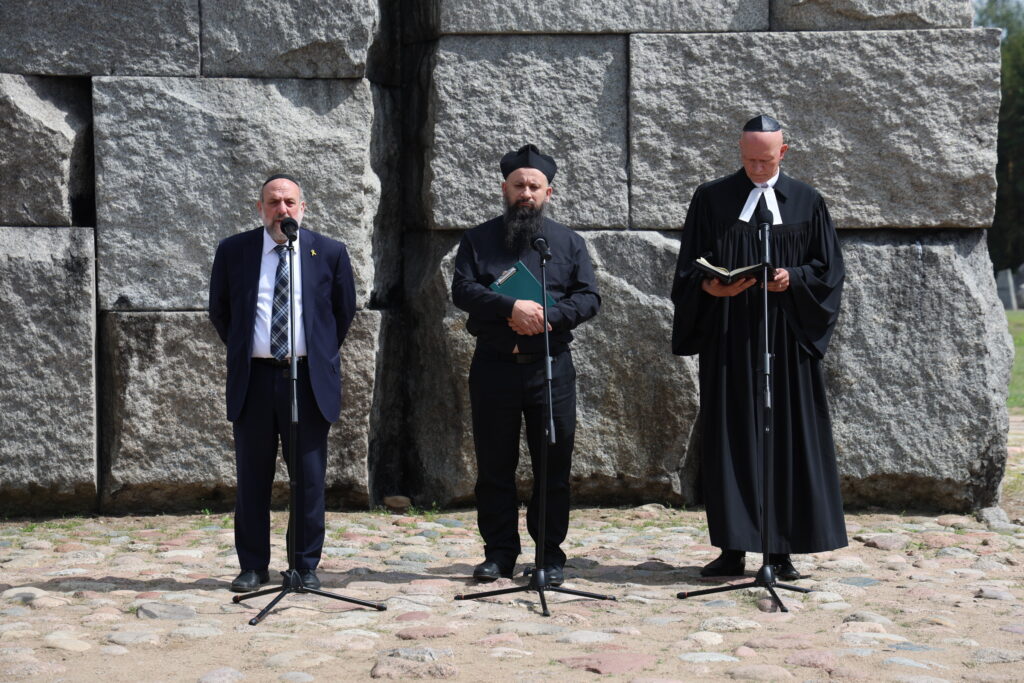
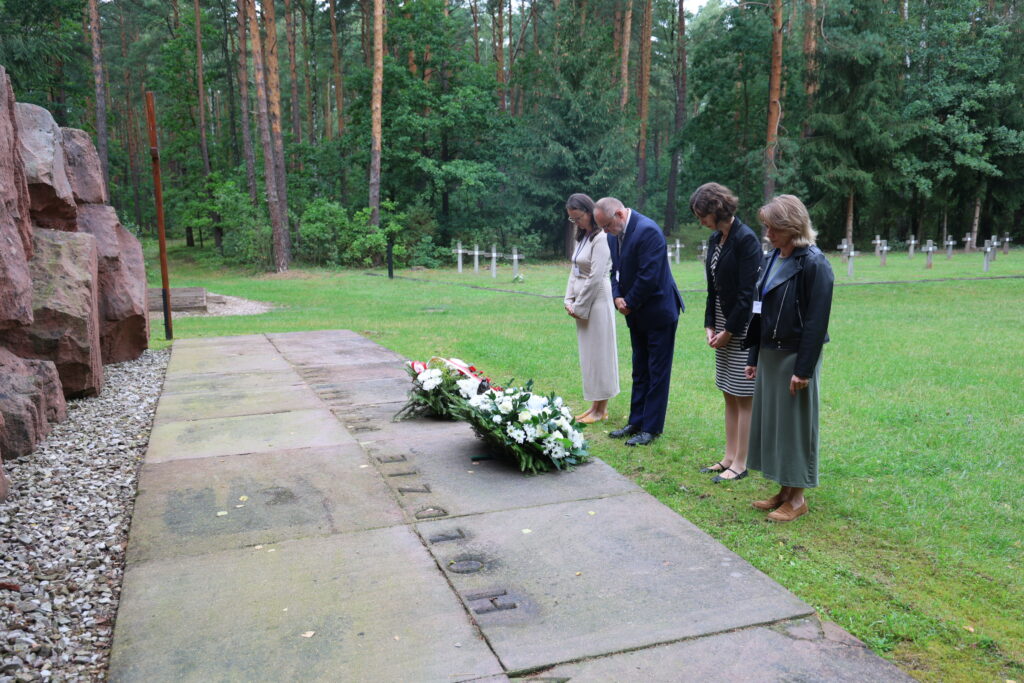
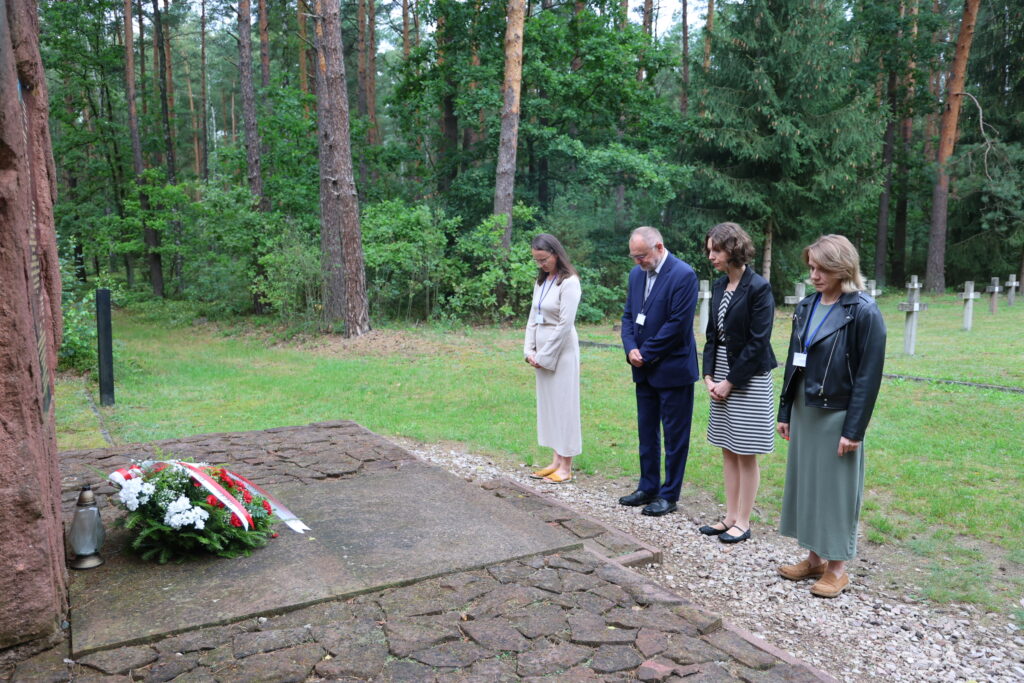
Following the speeches, an interfaith prayer service was held, led by Michael Schudrich, Chief Rabbi of Poland; Michał Jabłoński, Pastor of the Evangelical Reformed Parish in Warsaw; and Krzysztof Nagórny, Vicar of the Roman Catholic Parish in Prostyń. Guests also had the opportunity to view the outdoor exhibition “Behind the Wires: SS-Sonderkommando Treblinka”, prepared by the Treblinka Museum. The exhibition will remain on display until the end of August this year. Its curator is Monika Samuel, a staff member of the museum’s Research and Publications Department. On this important day, delegations from the Jewish Historical Institute, the District Office in Sokołów Podlaski, and the Treblinka Museum also paid tribute to the victims of the Treblinka I Labour Camp by laying flowers at the Execution Site and at the Roma and Sinti Memorial.